Institutional Heavyweights Bet Big on The Open Network (TON): A $400 Million Infusion
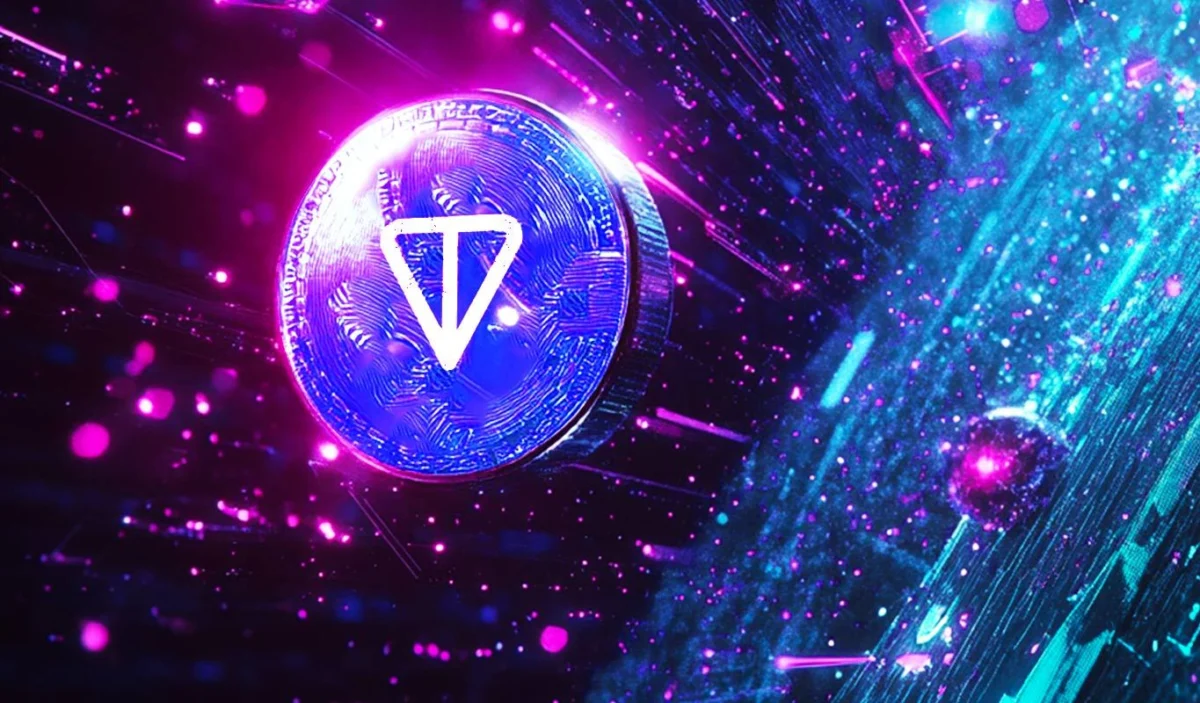
In a significant show of confidence for the decentralized finance and Web3 sectors, the TON Foundation has officially announced that venture capital firms have poured more than $400 million into Toncoin (TON), the native asset of The Open Network. This capital injection, backed by a consortium of some of the most prominent names in Silicon Valley and the crypto-native investment world, underscores a growing institutional conviction in the potential of blockchain-integrated consumer applications.
The investment round features a "who’s who" of venture capital, including Sequoia Capital, Ribbit Capital, Benchmark, Kingsway Capital, Vy Capital, Draper Associates, Libertus Capital, CoinFund, Hypersphere, SkyBridge Capital, and Karatage. This influx of capital is not merely a financial milestone; it represents a strategic alignment between traditional venture giants and a blockchain project uniquely positioned to bridge the gap between complex decentralized technology and mass-market social media adoption.
The Chronology: From Telegram’s Ambition to Community Autonomy
To understand the magnitude of this investment, one must trace the turbulent history of The Open Network. The project was originally conceived by Telegram, the globally dominant encrypted messaging platform, under the moniker "Telegram Open Network." At its inception, the project aimed to integrate a high-speed, scalable blockchain directly into the Telegram user experience.
The SEC Confrontation (2019–2020)
In 2019, the project hit a major regulatory roadblock. The U.S. Securities and Exchange Commission (SEC) filed a lawsuit against Telegram, alleging that the sale of "Grams" (the original internal token) constituted an unregistered securities offering. The ensuing legal battle proved costly and arduous. In May 2020, Pavel Durov, the CEO of Telegram, officially announced that the company was abandoning the project, citing the prohibitive legal environment and the SEC’s stance.
The Rise of the Open Source Community (2020–2023)
While Telegram stepped away, the code remained open-source. A dedicated collective of independent developers and enthusiasts took up the mantle, renaming the project "The Open Network" (TON) and establishing the TON Foundation to shepherd its development. Over the next three years, this community-led project worked to refine the architecture, focusing on sharding, ultra-fast transaction speeds, and a user-friendly interface that could theoretically support millions of users.
The Strategic Integration (2024–2025)
The narrative shifted significantly when Telegram, despite its previous formal separation, began re-integrating TON into its core ecosystem. By January 2025, the synergy became absolute: TON was declared the "exclusive blockchain" for Telegram’s burgeoning Mini Apps Ecosystem. This move effectively granted TON access to Telegram’s massive user base of over 1 billion monthly active users, creating a frictionless pathway for mainstream crypto adoption.
Supporting Data: Why $400 Million Matters
The $400 million investment is not an arbitrary figure; it represents a strategic commitment to scaling infrastructure. For a layer-1 blockchain, capital is the lifeblood of ecosystem development, developer incentives, and security.
1. Market Positioning
TON currently sits as the 14th-ranked cryptocurrency by market capitalization. While the asset has faced volatility—trading at approximately $3.61 at the time of this report—the long-term focus remains on its utility. Unlike many layer-1s that struggle to attract decentralized applications (dApps), TON has the distinct advantage of "social-first" distribution.
2. User Experience and Frictionless Payments
The primary value proposition of TON is the removal of the "crypto barrier." Within Telegram, users can send TON tokens to one another as easily as sending a photo or a text message. By eliminating the need for long, alphanumeric wallet addresses, the TON ecosystem solves the greatest hurdle to crypto mass adoption: user complexity.
3. Developer Ecosystem Growth
The influx of venture capital is expected to accelerate the development of "Mini Apps." These are lightweight, browser-based applications that run directly inside the Telegram interface. With institutional backing, the TON Foundation can now offer more robust grants, hackathon incentives, and technical support to developers, further deepening the moat around the TON ecosystem.
Official Responses: The Institutional Perspective
The decision by firms like Sequoia Capital to back TON is rooted in the belief that the "killer app" for blockchain is not necessarily a complex financial derivative, but a social interface that users already understand.
Shaun Maguire, a partner at Sequoia Capital, provided a clear rationale for the firm’s participation. In a statement, Maguire emphasized that the project’s strength lies in its rare ability to marry high-level consumer product strategy with decentralized infrastructure. "The TON team is the best in the world at the intersection of consumer product thinking and crypto infrastructure," Maguire noted.
This sentiment is echoed by the broader investment community involved in the round. The inclusion of firms like Ribbit and Benchmark—both known for their high-conviction bets on disruptive fintech—suggests that the market sees TON as a potential "Super App" backbone. By leveraging Telegram’s global distribution, TON avoids the "cold start" problem that plagues most new blockchain projects, which typically spend millions on user acquisition just to gain a foothold.
Strategic Implications: The Future of Web3 Social
The $400 million investment marks a turning point for the Web3 industry. For years, the narrative has been that blockchains are "solutions looking for a problem." With TON, the problem (social payments and decentralized app access) has been identified, and the solution (the TON blockchain) is already integrated into a platform with a billion users.
Implications for Decentralization
Critics of the TON model often point to the high degree of integration with Telegram as a potential centralization risk. However, proponents argue that by using an open-source, permissionless blockchain, the project ensures that the financial layer remains sovereign. The challenge for the TON Foundation in the coming years will be to maintain this balance—keeping the user experience intuitive for the average Telegram user while ensuring the underlying network remains robust, decentralized, and censorship-resistant.
Implications for Competitors
The success of TON puts significant pressure on other layer-1 platforms. Projects that rely on stand-alone wallets or separate browser extensions may find it increasingly difficult to compete with an ecosystem where the blockchain is "baked in" to a daily-use app. If Telegram continues to expand its Mini App ecosystem, TON could effectively become the default rails for the next generation of social-financial interactions.
The Path Forward
As the TON Foundation deploys this $400 million, the industry will be watching closely to see how the project handles scale. Will the network remain fast as volume increases? Will developers continue to build high-quality applications that utilize the blockchain’s capabilities? And, perhaps most importantly, will the casual Telegram user transition from a passive social media user to an active participant in the decentralized economy?
With this latest funding round, the foundation has secured the necessary runway to answer these questions. The partnership between institutional capital and the TON community serves as a clear signal: the era of speculative, isolated blockchain projects is waning, and the era of integrated, utility-driven consumer crypto is just beginning.
Disclaimer: This article is for informational purposes only and does not constitute financial, investment, or legal advice. Cryptocurrency investments involve a high degree of risk, including the total loss of principal. Investors should conduct thorough due diligence and consult with a qualified financial advisor before making any investment decisions. The Daily Hodl does not endorse or recommend the buying or selling of any specific digital assets.