Institutional Momentum: Digital Asset Investment Products Near All-Time Highs Amid Macroeconomic Shifts
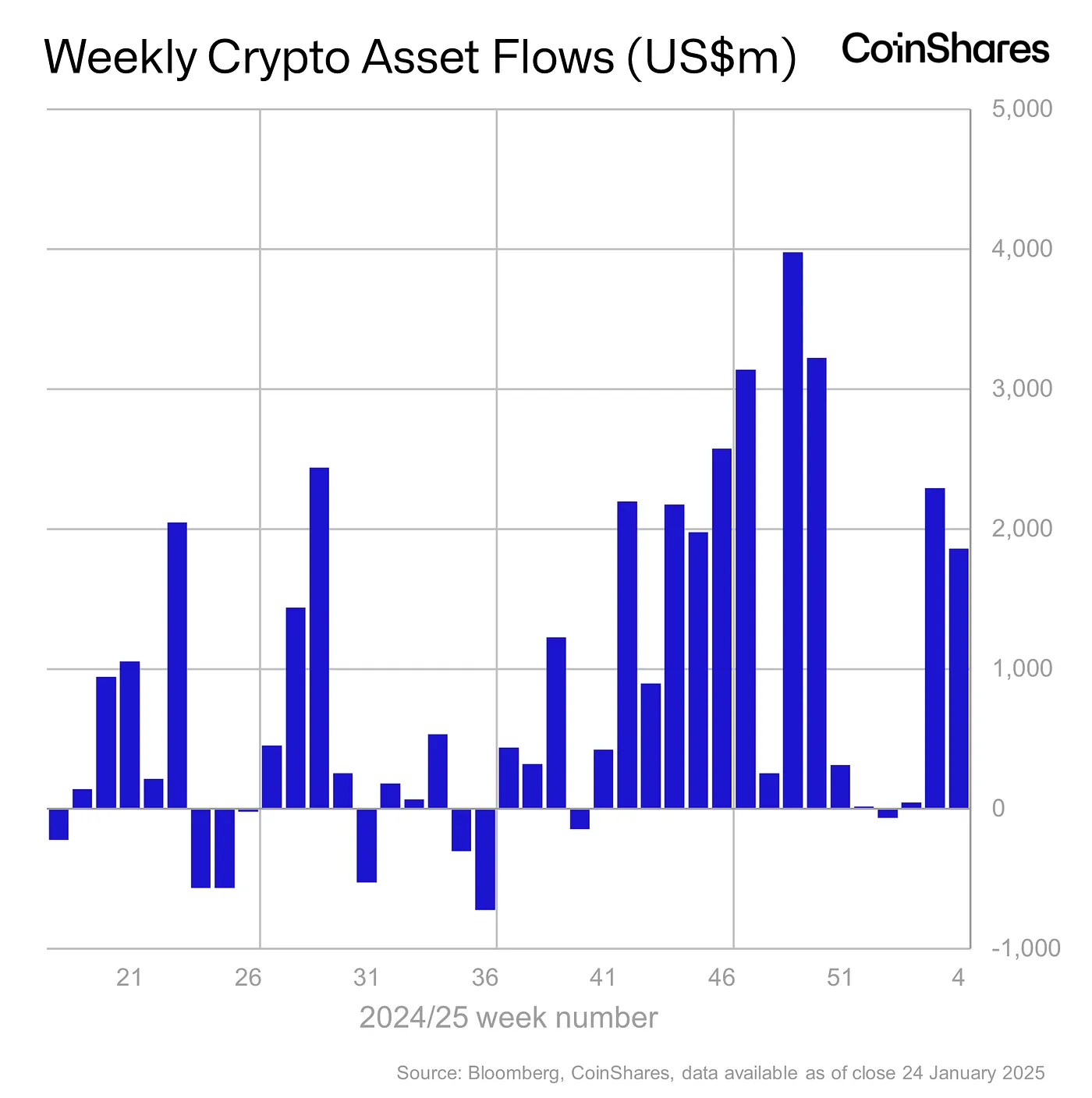
The global landscape for institutional cryptocurrency investment is undergoing a seismic shift, characterized by a rapid resurgence in capital inflows. According to the latest Digital Asset Fund Flows Weekly Report from CoinShares, the world’s leading digital asset management firm, crypto exchange-traded products (ETPs) have recorded nearly $1 billion in inflows in a single week. This surge signals a renewed, aggressive appetite for digital assets among institutional players, bringing year-to-date (YTD) inflows to a staggering $6.7 billion.
As the industry approaches the high-water marks set earlier in 2024, market participants are closely monitoring the macroeconomic catalysts driving this rally. From rising global M2 money supply to the emergence of Bitcoin as a strategic reserve asset at the state level, the narrative surrounding digital assets has shifted from speculative retail interest to entrenched institutional adoption.
The Core Data: A Wave of Capital Inflow
The recent data provided by CoinShares paints a picture of a market defined by overwhelming bullish sentiment. The $882 million recorded in global inflows over the past week represents more than just a temporary spike; it is a continuation of a four-week streak of consistent accumulation.
This momentum has pushed the cumulative YTD inflows to $6.7 billion, placing the market within striking distance of the $7.3 billion peak observed in early February 2024. The concentration of this capital is highly telling: the United States remains the undisputed engine of this growth, accounting for $840 million of the weekly total. While other regions like Canada and Hong Kong saw minor outflows—totaling $8 million and $4.3 million, respectively—these were easily eclipsed by the robust activity in the U.S., Germany ($44.5 million), and Australia ($10.2 million).
Chronology of the 2024 Institutional Rally
To understand the current state of the market, one must look at the timeline of events that transformed digital assets from a niche asset class into a cornerstone of modern portfolio management.
Q1 2024: The ETF Awakening
The year began with the historic approval and launch of spot Bitcoin ETFs in the United States. This event acted as the primary catalyst for the $61.6 billion in cumulative net inflows that defined the first two months of the year. Investors, previously sidelined by regulatory uncertainty, poured capital into these regulated vehicles, establishing a new baseline for institutional exposure.
Q2–Q3 2024: Consolidation and Macro Adjustment
Following the initial frenzy of the Q1 launch, the market entered a period of consolidation. Interest rates remained elevated, and inflation data in the U.S. provided a mixed outlook, leading to a temporary slowdown in ETP flows. During this phase, focus shifted toward regulatory developments and the potential for rate cuts by the Federal Reserve.
Q4 2024: The Second Surge
The current, fourth consecutive week of massive inflows marks the beginning of a second major wave. This phase is defined by a more sophisticated understanding of Bitcoin’s role as a hedge against currency devaluation. The total cumulative net inflows for U.S.-listed ETFs have now reached $62.9 billion, officially surpassing the previous high-water mark set in February. This is a critical milestone that confirms institutional demand is not only recovering but accelerating.
Supporting Data: Dissecting Asset Performance
While the aggregate numbers are impressive, the breakdown by asset class reveals a distinct hierarchy in investor preference.
Bitcoin’s Dominance
Bitcoin remains the undisputed leader in institutional preference. Of the $882 million in global inflows, Bitcoin accounted for $867 million. This dominance is not merely a reflection of market cap, but a testament to Bitcoin’s branding as "digital gold." As central banks continue to expand the M2 money supply, Bitcoin is increasingly viewed as the primary beneficiary of liquidity-driven asset inflation.
Ethereum and Altcoin Diversification
While Bitcoin captured the lion’s share, the performance of other assets provides a nuanced view of the market. Ethereum, often the second-most popular vehicle, saw modest inflows of $1.5 million. Conversely, the SUI network has emerged as a notable outlier, attracting $11.7 million in inflows. This suggests that while institutional investors remain risk-averse by focusing on Bitcoin, there is a burgeoning interest in Layer-1 protocols that demonstrate scalability and high throughput.
Macroeconomic Catalysts: Why Now?
The resurgence in inflows is not happening in a vacuum. CoinShares’ analysis highlights three primary drivers that are currently shaping the investment thesis for digital assets.
1. The Global Rise in M2 Money Supply
M2—a measure of the money supply that includes cash, checking deposits, and easily convertible near-money—is expanding globally. Historically, an increase in the money supply leads to currency debasement. Institutional investors are increasingly using Bitcoin as a hedge against this expansion, fearing that fiat currencies will lose purchasing power over the long term.
2. Stagflationary Risks in the U.S.
The specter of stagflation—a period of stagnant economic growth combined with rising inflation—poses a unique challenge to traditional portfolios. Bonds and equities often struggle in this environment. Digital assets, which operate outside the traditional banking system, are being re-evaluated as "non-correlated" assets that can provide a buffer when traditional markers of economic health remain stagnant.
3. Bitcoin as a Strategic Reserve Asset
Perhaps the most transformative development is the movement within various U.S. states to recognize Bitcoin as a strategic reserve asset. As state-level political bodies begin to hold or advocate for Bitcoin holdings, the asset moves from a speculative commodity to a sovereign-grade store of value. This transition provides the necessary regulatory comfort for pension funds and insurance companies to increase their allocations.
Implications for the Future
The current trajectory of fund flows has significant implications for the broader financial ecosystem.
Increased Market Maturation
The reliance on regulated ETPs signifies that the market is moving away from direct, self-custodial risks toward institutional-grade infrastructure. This is essential for the maturation of the asset class. As more capital flows through regulated entities, the market is likely to see reduced volatility and increased liquidity, making it more attractive for traditional financial advisors to recommend crypto exposure to their clients.
The Institutional "Fear of Missing Out" (FOMO)
With cumulative inflows hitting new all-time highs, there is a palpable sense of urgency among institutional managers. The "wait and see" approach that dominated the middle of the year is being replaced by a "buy now" mentality. This transition likely sets the stage for a strong close to 2024 and a volatile, yet upwardly trending, start to 2025.
Policy and Regulatory Pressure
The success of these investment vehicles puts increased pressure on global regulators to provide clear frameworks. As assets under management (AUM) grow, the influence of these funds on the underlying price of the assets becomes undeniable. Regulators are now forced to balance the need for investor protection with the desire to foster innovation in an asset class that is clearly here to stay.
Conclusion: A New Era for Digital Assets
The findings from CoinShares serve as a definitive marker that the institutionalization of digital assets is no longer a future possibility; it is a current reality. The shift in capital toward Bitcoin and select alternative protocols, driven by legitimate macroeconomic concerns, suggests that digital assets have successfully secured a permanent seat at the table of global finance.
For the retail investor, the message is clear: institutional money is now the primary driver of market direction. By observing the flow of capital into these vehicles, participants can better understand the shifting tides of the global economy. As we move into the final quarter of the year, all eyes will be on whether these inflows continue to climb, potentially pushing the digital asset market into a new, uncharted territory of valuation.
Disclaimer: The information provided in this article is for educational and informational purposes only and does not constitute financial, investment, or legal advice. Digital assets, including Bitcoin and other cryptocurrencies, are subject to high volatility and risk. Investors should conduct thorough due diligence and consult with a qualified financial advisor before making any investment decisions. The author and the publication assume no responsibility for any losses or damages resulting from the use of this information.