Silicon Valley Giant Andreessen Horowitz Defies Market Downturn with Blockbuster $4.5 Billion Crypto Fund
SAN FRANCISCO — In a resounding vote of confidence for the decentralized technology sector, Silicon Valley venture capital titan Andreessen Horowitz (a16z) has announced the launch of a massive $4.5 billion digital asset fund. The announcement arrives amidst a period of widespread market stagnation and heightened volatility across global cryptocurrency exchanges, signaling that institutional conviction in blockchain technology remains remarkably resilient despite short-term macroeconomic headwinds.
The newly unveiled capital vehicle, designated "Crypto Fund IV," brings a16z’s total capital raised specifically for cryptocurrency and Web3 investments to a staggering $7.6 billion over the past several years. This latest raise easily dwarfs previous industry benchmarks, cementing the firm’s status as the undisputed heavyweight champion of venture-backed crypto investing.
While retail investors and opportunistic traders frequently panic during prolonged market pullbacks—often colloquially referred to as "crypto winters"—industry veterans and long-term institutional backers view these transitional phases through an entirely different lens. For a16z, a market downturn is not a time to retreat, but rather an optimal window to deploy capital, filter out speculative noise, and support foundational infrastructure developers.
Main Facts
- The Investment Vehicle: Andreessen Horowitz has officially launched "Crypto Fund IV," a massive $4.5 billion investment pool dedicated entirely to digital assets and Web3 infrastructure.
- Total Capital Deployed: With this latest addition, a16z has raised approximately $7.6 billion across four dedicated crypto funds since its initial foray into the space.
- Strategic Allocation: The funds will be distributed across various high-growth sectors, including decentralized finance (DeFi), Web3 social media protocols, metaverse gaming, non-fungible tokens (NFTs), decentralized autonomous organizations (DAOs), and zero-knowledge (ZK) scaling solutions.
- Market Context: The fund’s launch occurs during a notable period of market contraction and price suppression across major digital assets like Bitcoin and Ethereum.
- Leadership Commentary: General Partner Chris Dixon proclaimed that the industry is entering the "golden era of Web 3.0," while partner Arianna Simpson emphasized that bear markets provide the ideal environment for builders to focus on technological innovation rather than price charts.
Chronology: The Evolution of Computing and a16z’s Crypto Journey
To understand the scale and ambition of Crypto Fund IV, it is necessary to examine both the historical trajectory of technological computing cycles and the chronological development of a16z’s crypto division.
The Macro-Computing Paradigm
In a detailed public letter announcing the fund, a16z General Partner Chris Dixon contextualized the rise of blockchains within a broader historical framework of technological evolution. According to Dixon, the history of modern computing has consistently adhered to a major generational cycle every 10 to 15 years:
- The 1980s: The advent and mainstream commercialization of Personal Computers (PCs).
- The 1990s: The explosive commercial growth of the global internet and World Wide Web.
- The 2000s: The proliferation of mobile computing, smartphones, and app ecosystems.
- The 2010s to Present: The foundational development of programmable blockchains and decentralized networks.
Dixon argues that blockchains represent the natural successor to these past computing paradigms, serving as the underlying architecture for the next major digital epoch—collectively known as Web 3.0.
A Timeline of a16z’s Crypto Commitment
Andreessen Horowitz did not arrive at the crypto ecosystem overnight. The firm’s journey into Web3 has been methodical and expanding:
- 2013–2017 (Early Exploration): The firm made its maiden voyage into the cryptocurrency space by leading early-stage venture rounds in pioneering companies, most notably Coinbase in 2013, when Bitcoin was still widely dismissed by mainstream finance.
- 2018 (Crypto Fund I): Recognizing the burgeoning potential of smart contract platforms, a16z launched its inaugural dedicated crypto fund, raising $350 million to back early blockchain protocols.
- 2020 (Crypto Fund II): Amid the recovery following the 2018–2019 bear market, the firm raised a $515 million second fund, doubling down on decentralized finance (DeFi) infrastructure.
- 2021 (Crypto Fund III): Marking a massive escalation in institutional interest, a16z announced a landmark $2.2 billion crypto fund in June 2021, setting a record at the time for the largest venture capital fund dedicated to digital assets.
- May 2022 (Crypto Fund IV): Despite swirling macroeconomic uncertainty and a sharp correction in crypto asset prices, the firm shattered its own previous records by unveiling the $4.5 billion Crypto Fund IV. Of this capital, $1.5 billion has been earmarked for seed investments, while $3 billion is designated for venture-stage growth.
Supporting Data and Market Dynamics
The deployment of $4.5 billion into the digital asset ecosystem occurs against a complex macroeconomic backdrop characterized by rising inflation, aggressive monetary tightening by central banks, and a broader cooling of global risk-asset markets. However, venture capital inflow into blockchain technology tells a story that diverges significantly from public market price action.
Where the Money Goes: Sector Breakdown
According to firm disclosures, Crypto Fund IV will not be concentrated in a single asset class or narrow application. Instead, it is designed to build out a comprehensive technological stack for the decentralized internet. The targeted sub-sectors include:
- Zero-Knowledge (ZK) Proofs and Scalability: As Ethereum and other layer-1 networks experience congestion and high transaction fees, ZK-rollups have emerged as the premier cryptographic solution for scaling transaction throughput while preserving user privacy and decentralization. A16z continues to pour resources into cryptographic research and ZK application layers.
- Decentralized Finance (DeFi): Despite regulatory scrutiny and periodic protocol exploits, the underlying architecture of permissionless lending, automated market makers (AMMs), and yield-generating protocols continues to mature, attracting institutional-grade interest.
- Web3 Social and Creator Economies: Seeking to disrupt legacy Web 2.0 social media monopolies, a16z is backing protocols that allow creators and users to truly own their digital identities, data, and monetization streams via cryptographic tokens and NFTs.
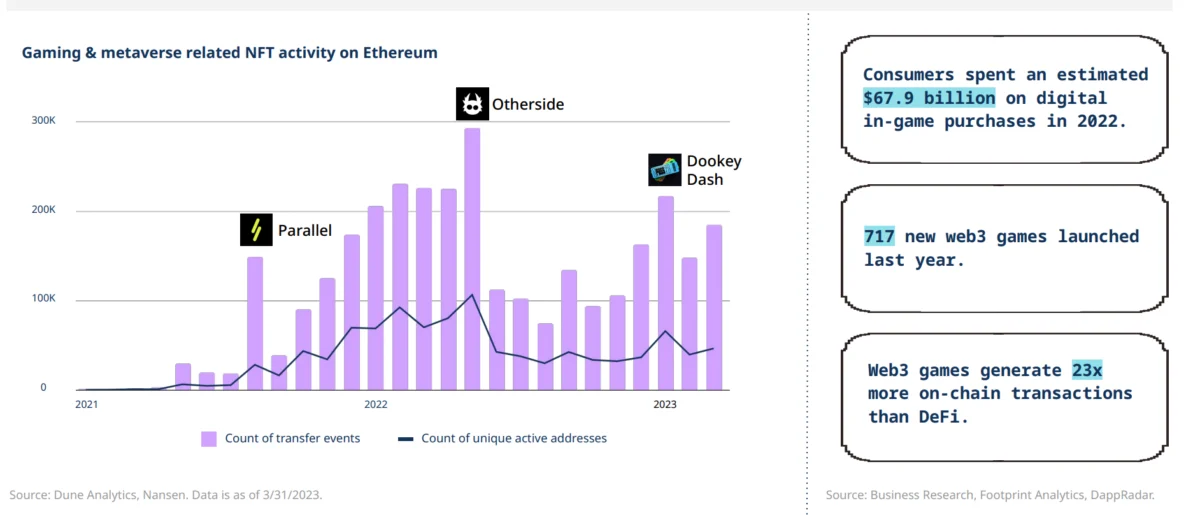
- Metaverse and Gaming: Interactive entertainment powered by blockchain infrastructure—where players retain true digital ownership of in-game assets—remains a core pillar of the firm’s thesis.
- DAOs and Governance Infrastructure: As decentralized autonomous organizations scale in membership and capital reserves, the tools required for voting, treasury management, and collaborative execution require sophisticated software solutions.
The Historical Precedent of "Crypto Winters"
Market skeptics often question the timing of multi-billion-dollar fund launches during periods of price suppression. However, historical data from previous market cycles suggests that bear markets are frequently the breeding ground for the most successful technology companies.
During the prolonged crypto winter of 2018–2019—often referred to as the "builder’s market"—developers quietly laid the groundwork for innovations that would eventually power the 2020–2021 bull run, including automated market makers like Uniswap, multi-chain bridges, and advanced Layer-2 scaling solutions. By securing capital during quiet periods, venture firms position themselves to fund projects free from the hyper-inflationary valuations and superficial hype cycles that often plague overheated bull markets.
Official Responses and Industry Commentary
The unveiling of Crypto Fund IV has generated widespread commentary across the financial, technological, and venture capital landscapes. Leaders from a16z provided deep insights into their strategic rationale during various public statements and media appearances.
Chris Dixon on the "Golden Era"
In his comprehensive foundational essay accompanying the fund’s launch, Chris Dixon articulated a deeply optimistic vision for the current state of Web3 development:
"Since the advent of computing in the 1940s, there has been a major computing cycle every 10-15 years, including PCs in the ’80s, the internet in the ’90s, and mobile computing in the ’00s. We believe blockchains will power the next major computing cycle, which we call crypto or Web 3.0… we think we are now entering the golden era of Web 3.0."
Dixon further emphasized that the qualitative nature of the developer community has fundamentally shifted over the past several years:
"Programmable blockchains are sufficiently advanced, and a diverse range of apps have reached tens of millions of users. More importantly, a massive wave of world-class talent has entered Web 3.0 over the last year. They are brilliant and passionate and want to build a better internet."
Arianna Simpson on Bear Market Opportunities
Appearing in an exclusive interview with CNBC following the announcement, a16z General Partner Arianna Simpson addressed the apparent paradox of launching a record-breaking fund during a downward-trending market cycle.
Simpson argued that short-term asset price movements are largely irrelevant to long-term venture capital deployment, noting that periods of market apathy allow entrepreneurs to focus entirely on engineering rather than speculation:
"Bear markets are often when the best opportunities come about when people are actually able to focus on building technology rather than getting distracted by short-term price activity."
Simpson’s sentiments are echoed by numerous founders within the a16z portfolio, who note that venture funding provides a multi-year runway, shielding early-stage teams from the immediate turbulence of public token markets and enabling sustained research and development.
Broader Implications for the Global Tech and Financial Ecosystem
The deployment of a $4.5 billion war chest by Silicon Valley’s most influential venture capital firm carries profound implications for the future of the technology sector, regulatory compliance, and the global financial architecture.
1. Institutional Validation and Mainstream Integration
By committing nearly $8 billion in total crypto-specific capital, Andreessen Horowitz continues to normalize digital assets as a legitimate, institutional-grade asset class. This sustained vote of confidence helps counteract negative narratives driven by high-profile corporate failures or speculative bubbles, reassuring pension funds, endowments, and corporate treasuries that blockchain technology represents a permanent structural shift in global computing.
2. Talent Retention and Brain Drain from Web 2.0
One of the most consequential effects of well-funded venture ecosystems is their ability to attract top-tier engineering and academic talent. With $1.5 billion specifically designated for early-stage seed funding, a16z is effectively creating a financial safety net for elite developers, cryptographers, and product designers leaving traditional tech giants (such as Google, Meta, and Apple) to enter the Web3 space. This ongoing "brain drain" accelerates the technical maturity of decentralized protocols.
3. Regulatory Navigation and Compliance Focus
As regulatory bodies in the United States and internationally increase scrutiny on digital assets, decentralized finance, and stablecoins, well-capitalized venture funds are increasingly in a position to help portfolio companies navigate complex legal landscapes. A16z maintains an extensive in-house policy and regulatory affairs team designed to advocate for sensible legislative frameworks that protect consumers while fostering domestic technological innovation.
4. Acceleration of Enterprise-Grade Infrastructure
While early crypto cycles focused primarily on peer-to-peer digital cash and speculative tokens, Crypto Fund IV signals a definitive shift toward enterprise-grade infrastructure. By backing zero-knowledge rollups, advanced decentralized storage, secure cross-chain interoperability, and scalable developer tooling, a16z is actively building the plumbing required for mainstream, enterprise-level adoption of blockchain networks.
Conclusion
Andreessen Horowitz’s launch of Crypto Fund IV during a period of market stagnation serves as a powerful reminder of the divergent perspectives separating short-term traders from long-term institutional builders. While fluctuating charts and macroeconomic pressures dominate daily financial news cycles, foundational venture capital continues to flow into the digital asset ecosystem at unprecedented scales.
By treating the current market downturn as a prime environment for technological innovation rather than a cause for retreat, a16z is betting heavily that the next decade of digital evolution will be anchored entirely by decentralized protocols. Whether this $4.5 billion bet succeeds in ushering in the proclaimed "golden era of Web 3.0" will depend on the ingenuity of the developers building upon its foundation, but one reality remains indisputable: institutional commitment to the future of blockchain technology has never been stronger.