Market Sentiment Shift: Institutional Investors Pull Nearly $1 Billion from Bitcoin as Hawkish Fed Rhetoric Rattles Crypto Markets
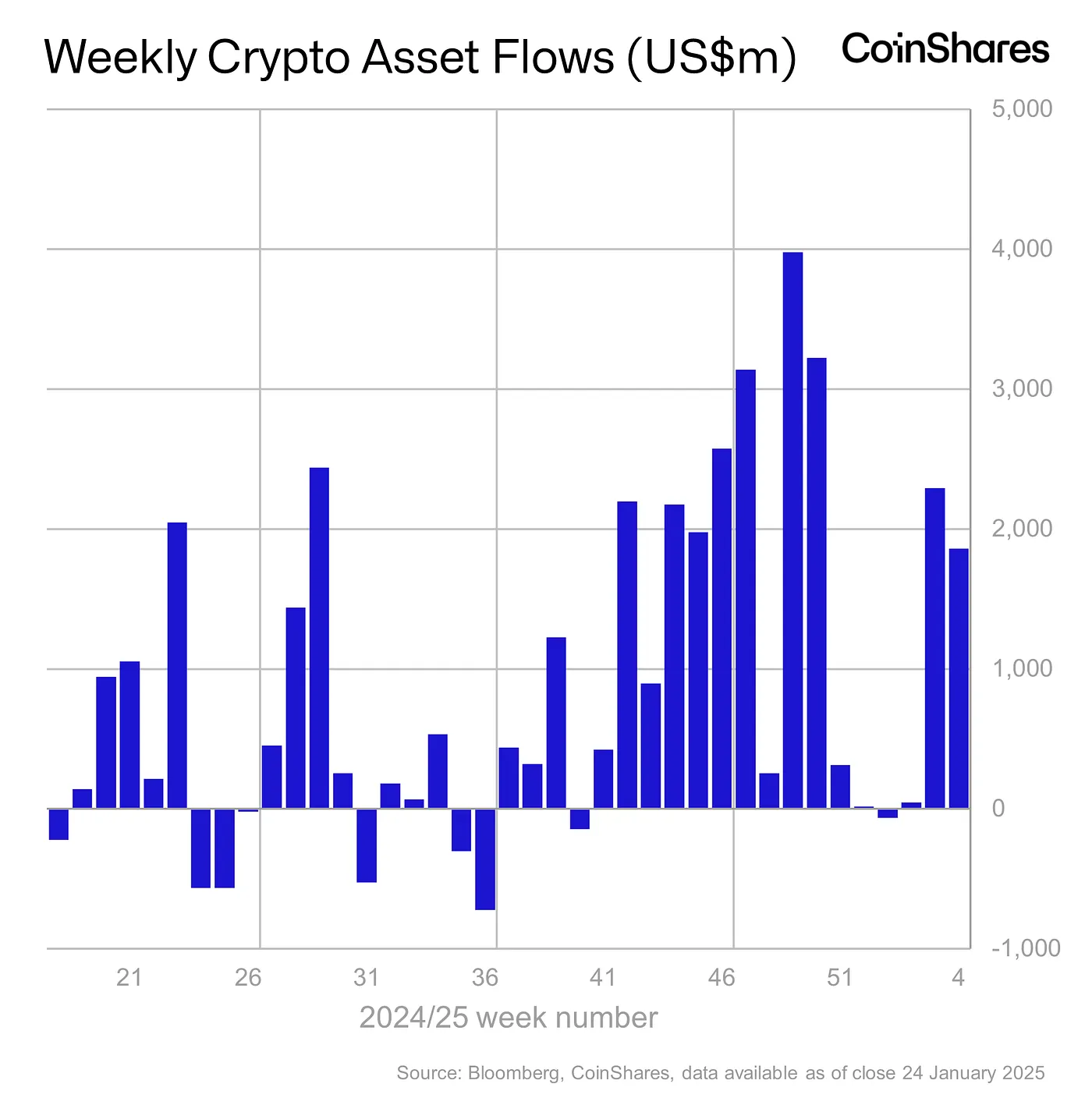
In a significant reversal of the bullish sentiment that has characterized the cryptocurrency market throughout late 2024, institutional investors have executed a massive tactical retreat from Bitcoin. According to the latest weekly fund flow report from digital asset management firm CoinShares, the sector saw a net outflow of $360 million, a figure heavily influenced by a staggering $945.89 million exit from Bitcoin-focused investment vehicles.
This dramatic liquidation signals a cooling of institutional enthusiasm, triggered largely by evolving expectations surrounding United States monetary policy. As the dust settles, the data reveals a complex, bifurcated market: while Bitcoin faced a wave of profit-taking and risk aversion, select altcoins—most notably Solana—experienced a surge in capital allocation, suggesting that institutional interest remains intact but is shifting toward assets with different utility profiles.
The Catalyst: Jerome Powell and the Hawkish Pivot
The primary driver behind this sudden exodus is the increasingly uncertain path of Federal Reserve interest rate policy. Despite the Fed’s recent decision to implement a fresh interest rate cut, the market’s reaction was lukewarm, if not overtly skeptical.
The catalyst for the sell-off was a series of comments from Federal Reserve Chair Jerome Powell, which market participants have interpreted as "hawkish." In recent briefings, Powell emphasized a cautious approach to future easing, signaling that the central bank is not on a pre-determined path to lower rates. This rhetoric has successfully cast doubt on the probability of a December rate cut, a prospect that had previously provided a tailwind for risk-on assets like Bitcoin.
For institutional investors, who are highly sensitive to the "opportunity cost" of capital, the prospect of interest rates remaining "higher for longer" creates a less favorable environment for non-yielding assets. When the risk-free rate of return on US Treasuries remains competitive, the incentive to hold volatile digital assets diminishes, leading to the rapid unwinding of positions observed last week.
Chronology of the Market Shift
The week began with high expectations following the Fed’s announcement, but the sentiment shifted rapidly as the nuances of Powell’s statements were digested by analysts and institutional trading desks.
- Monday & Tuesday: Markets initially reacted with confusion. While the rate cut was delivered as expected, the forward-looking guidance triggered a repricing of risk assets. Institutional outflows began to accelerate mid-week as major funds rebalanced portfolios to account for a less dovish Fed.
- Wednesday: Bitcoin ETFs saw their largest single-day outflows in months. The velocity of the sell-off caught many retail traders off guard, as the primary selling pressure originated from institutional-grade accounts rather than individual holders.
- Thursday: Regional divergence became apparent. While US markets faced massive outflows of $439 million, European markets began to show signs of resilience. Data from Germany and Switzerland revealed a trend of "buying the dip," providing a minor counterbalance to the overwhelming selling pressure from North America.
- Friday: The week concluded with a net outflow of $360 million, confirming that the "sell-off" was not just a temporary fluctuation but a structural adjustment in portfolio allocations across major institutional players.
Supporting Data: A Tale of Two Assets
The CoinShares report provides a granular view of how capital is rotating within the digital asset ecosystem. The data paints a picture of a market that is not necessarily abandoning crypto, but rather refining its exposure.
The Bitcoin Retreat
The $945.89 million outflow from Bitcoin is the most significant data point of the week. This represents a substantial portion of the capital that had been flowing into Spot Bitcoin ETFs earlier in the month. It suggests that institutional investors are moving into a "risk-off" posture, opting to lock in profits accrued over the previous fiscal quarter rather than betting on continued momentum in the face of macroeconomic uncertainty.
The Rise of the Altcoins
In stark contrast to Bitcoin, the altcoin market—specifically the "Ethereum-killers" and Layer-1 protocols—showed remarkable strength.
- Solana (SOL): Solana was the clear winner, attracting $421.11 million in inflows. This marks the second-largest weekly haul for the asset, underscoring its growing status as an institutional favorite for decentralized finance (DeFi) and high-frequency transaction applications.
- Ethereum (ETH): Despite the broader market volatility, Ethereum recorded $57.59 million in inflows. This suggests that while Bitcoin is viewed as a "macro-proxy," Ethereum is being held for its specific network utility and staking yield potential.
- XRP: The token saw $43.18 million in inflows, further illustrating a appetite for assets that offer unique institutional use cases, particularly in cross-border payments.
Regional Disparities: Europe vs. The United States
The report highlights a growing geographical divide in how investors perceive digital assets. The United States, which has recently become the epicenter of crypto institutionalization through the launch of various ETFs, led the global outflow tally with $439 million. This underscores the intense focus US institutions place on Fed policy and domestic regulatory shifts.
Conversely, Europe demonstrated a degree of independence from the US narrative. Germany recorded $32 million in inflows, and Switzerland added $30.8 million. These figures suggest that European institutional investors may be operating under a different set of catalysts, perhaps driven by local regulatory clarity or a differing view on the European Central Bank’s (ECB) potential policy path compared to the Federal Reserve.
Implications for the Future of Digital Asset Markets
The current market environment carries several critical implications for investors and observers of the digital asset space.
1. The Decoupling of Bitcoin and Altcoins
For years, the crypto market has moved in lockstep with Bitcoin. However, the latest data suggests a potential decoupling. If institutional investors continue to view Bitcoin as a macro-sensitive asset while viewing Solana and other Layer-1s as "tech-growth" assets, we may see a period where Bitcoin consolidates while altcoins experience idiosyncratic rallies.
2. Sensitivity to Central Bank Communication
The market has proven that it is currently "fed-dependent." The days of Bitcoin acting as a pure "digital gold" hedge against inflation have been complicated by its high correlation to liquidity cycles. Investors must now treat Jerome Powell’s press conferences with the same level of scrutiny as they do on-chain metrics or protocol upgrades.
3. The Institutional Maturity Test
The fact that outflows were met with inflows in other assets suggests that institutional capital is becoming more sophisticated. Rather than engaging in a total "exit" from the crypto space, these players are exhibiting rotational behavior. This is a sign of a maturing market—where investors are differentiating between "store of value" assets (Bitcoin) and "utility/infrastructure" assets (Solana, Ethereum).
4. Volatility as a Constant
With the December Fed meeting looming, the uncertainty regarding interest rates will likely keep volatility high. Investors should anticipate continued turbulence as the market searches for a new equilibrium. The "hawkish" stance adopted by the Fed has effectively reset the floor for risk assets, and the market will require significant positive news—whether in the form of lower inflation data or clearer signs of economic cooling—to reverse this trend.
Conclusion
The $360 million outflow serves as a sobering reminder that the crypto market remains deeply embedded in the broader global financial system. When the Federal Reserve talks, the crypto market listens, and the current "hawkish" sentiment has prompted a significant reallocation of capital.
However, the resilience of assets like Solana and Ethereum suggests that the institutional appetite for blockchain technology is not dead—it is merely undergoing a transformation. Investors are no longer blindly buying the entire asset class; they are becoming more discerning, prioritizing projects with tangible utility and ecosystem growth. As we move into the final weeks of 2024, the focus will remain squarely on the intersection of monetary policy and digital asset performance.
Disclaimer: The information provided in this article is for educational and informational purposes only and does not constitute financial, investment, or legal advice. Cryptocurrency investments are subject to high market volatility. Readers are encouraged to conduct their own independent research and consult with a qualified financial advisor before making any investment decisions.