The 20 Millionth Milestone: Bitcoin Enters Its Final Era of Scarcity
The global financial landscape reached a symbolic, yet profoundly significant, threshold this past Sunday. Miners operating on the Bitcoin network successfully processed the 20 millionth coin, leaving only one million units left to be minted before the network hits its hard-coded limit of 21 million. This milestone, achieved at block height 939,999, marks the conclusion of 17 years, two months, and one week of continuous computational effort—a journey that began with the mysterious genesis block mined by Satoshi Nakamoto in January 2009.
As the network enters this final phase of production, the implications for investors, miners, and the broader macroeconomic environment are coming into sharp focus. With over 95% of the total supply already in existence, the scarcity of Bitcoin is transitioning from a theoretical design feature to a tangible reality.
A Chronology of Computational History
To understand the magnitude of the 20 millionth coin, one must look at the clockwork precision of Bitcoin’s issuance schedule. Unlike fiat currencies, which are subject to the discretionary policies of central banks, Bitcoin’s supply is governed by a decentralized protocol.
- January 2009: The Genesis Block is mined, introducing the first 50 BTC into existence.
- 2012–2020: Through three consecutive halving events, the block reward dropped from 50 BTC to 25, then 12.5, and finally 6.25 BTC.
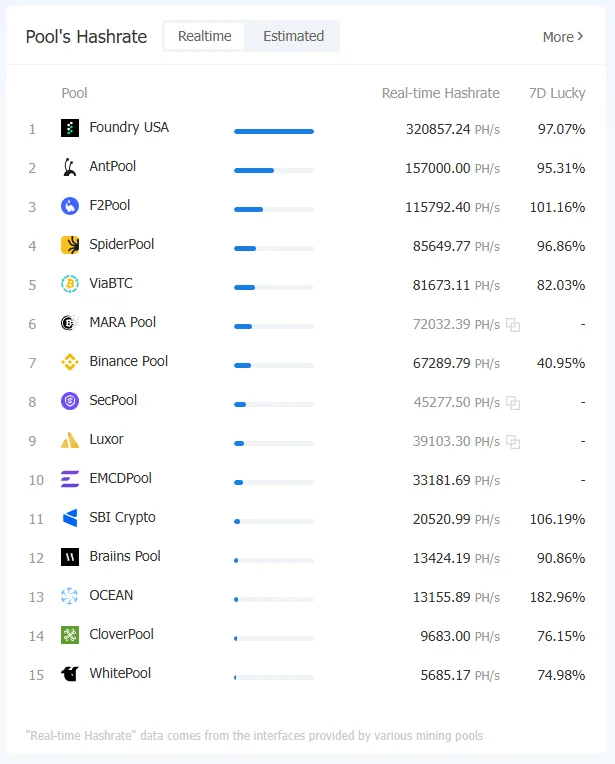
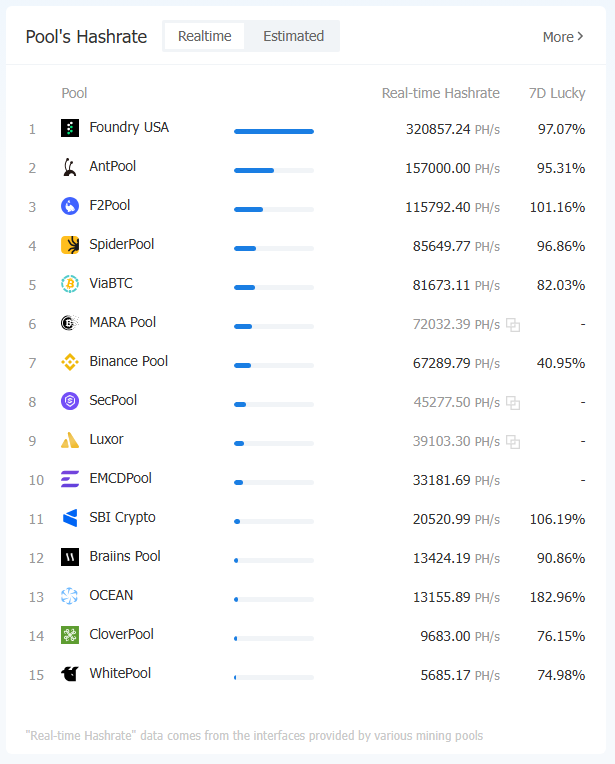
- April 2024: The fourth halving reduced the block subsidy to 3.125 BTC, the current rate at which Foundry USA—the mining pool responsible for the 20 millionth coin—operates.
- The Future: The remaining one million coins will be distributed over the next 114 years. While the last full Bitcoin is projected to be mined in the 2090s, the final "satoshi" (the smallest unit of Bitcoin, equivalent to 0.00000001 BTC) is not expected to be generated until approximately 2140.
The journey to 20 million has been marked by exponential growth in hash rate and global adoption. What started as a fringe experiment on a single laptop has evolved into a global, multi-trillion-dollar infrastructure, sustained by massive data centers and industrial-grade mining rigs.
Supporting Data: The Reality of Lost Supply
While the protocol records 20 million coins in existence, market analysts and blockchain forensics firms caution that the "circulating supply" is a vastly different metric. According to data provided by River Financial and Chainalysis, a significant portion of these coins are effectively removed from the economy forever.
Estimates suggest that between 2.3 million and 3.7 million BTC have been permanently lost. This loss is attributed to a variety of human and technical errors:
- Early Era Losses: During the first few years of Bitcoin, when the asset was worth pennies, many early adopters discarded hard drives or lost access to digital wallets without realizing the future value of their holdings. Approximately 1.8 million coins are believed to have been lost in this "Wild West" era.
- Technical Dead-ends: Roughly 230 BTC are trapped in the original genesis block and various early scripts that are technically impossible to spend.
- Human Error: Modern-day losses continue to mount due to forgotten passwords, physical destruction of hardware wallets, and the tragic passing of individuals who left no instructions for their heirs.
Consequently, the "real" supply available to the market is significantly lower than the 20 million figure suggests. This effectively creates a "scarcity premium" that is rarely captured by simple market capitalization metrics.

The Mining Dilemma: Revenue and Sustainability
The mining industry serves as the backbone of the Bitcoin network, providing the security that prevents double-spending and ensures the integrity of the ledger. However, the protocol’s design creates a long-term tension between security and miner profitability.
As the block subsidy continues to diminish through the quadrennial halving process, miners are forced to rely increasingly on transaction fees.
- The 2040s Outlook: Daily issuance of new coins will fall below 30 BTC.
- The 2060s Outlook: Daily issuance will drop below 2 BTC.
Industry experts remain divided on whether transaction fees alone can incentivize miners to maintain the network’s current level of security. If transaction fees are not sufficiently high, there is a risk that the hash rate could decline, potentially making the network more vulnerable to 51% attacks. Conversely, proponents argue that as the price of Bitcoin theoretically rises to account for its increasing scarcity, the value of those transaction fees will be enough to sustain the industry’s operational costs.
The next critical juncture for the mining sector is the 2028 halving, scheduled for April 11. At that time, the block reward will be sliced once more, dropping from 3.125 BTC to 1.5625 BTC. This event will likely trigger further consolidation in the mining industry, as only the most energy-efficient operations with the lowest overhead will remain profitable.
Macroeconomic Context and Market Sentiment
The milestone of 20 million coins was achieved against a complex macroeconomic backdrop. Bitcoin has spent much of the year trading in a volatile range, currently hovering around the $70,000 mark. Despite a nearly 21% year-to-date decline from previous peaks, the asset has demonstrated resilience, gaining roughly 3.44% in the week leading up to this milestone.
Investors are currently navigating a "perfect storm" of geopolitical tension, shifting monetary policy in the United States, and evolving regulatory landscapes in the European Union and Asia. Despite these pressures, the fundamental thesis of Bitcoin—as a "digital gold" with a fixed, non-inflationary supply—remains the primary driver for long-term institutional adoption.
Official Perspectives and Industry Reaction
Major stakeholders in the cryptocurrency space have viewed the 20 millionth coin as a testament to the protocol’s robustness. Foundry Digital, the entity that processed the block, has yet to issue a formal press release regarding the specific block, but industry observers point to their achievement as a standard milestone in the ongoing maintenance of the network.
Critics, however, continue to point to the environmental and economic cost of the mining process. Environmental advocacy groups frequently cite the high energy consumption of the proof-of-work mechanism, while some central bankers remain skeptical of an asset that operates outside of traditional monetary policy.
Yet, for the decentralized community, the 20 millionth coin is a validation of Satoshi Nakamoto’s original whitepaper. It confirms that the code is executing exactly as intended. The "endpoint" is no longer a theoretical date in the distant future; it is a visible destination on the horizon.
The Long Road to 2140: Implications for the Future
As we move past the 20 million mark, the narrative surrounding Bitcoin will inevitably shift. The conversation is moving from "How many coins can be mined?" to "How will the network function when the issuance stops?"
The remaining one million coins will be released at a pace that grows slower and slower. This "long tail" of issuance ensures that the inflation rate of Bitcoin will eventually hit zero, completing its transformation into a truly deflationary asset. For the next 114 years, the global economy will observe a live, large-scale experiment in whether a stateless, decentralized currency can successfully replace the inflationary models of the past.
The 20 millionth coin is more than just a number; it is a checkpoint in the evolution of money. Whether Bitcoin fulfills its promise as a global reserve asset or remains a niche store of value, the fact remains that 95.24% of its existence is now firmly behind us. The countdown to 2140 has officially entered its final, most critical chapter.