The Great Mining Metamorphosis: How Bitcoin Miners are Pivoting to AI to Survive the Post-Halving Era
The global cryptocurrency mining industry is currently undergoing its most significant structural transformation since the inception of the Bitcoin network. Following the highly anticipated—and arguably disruptive—Bitcoin halving event in April 2024, the landscape for mining operators has shifted from a period of relative stability to one of intense volatility and forced innovation. With daily block rewards slashed by 50%, miners are facing a 70% drop in daily revenue, a reality that has triggered a "survival of the fittest" environment.
As legacy mining models struggle under the weight of reduced profitability and rising operational costs, a new, technologically advanced paradigm has emerged: the integration of Artificial Intelligence (AI) and high-performance computing (HPC).
The Catalyst: A Post-Halving Reality Check
To understand the current pivot, one must look at the mechanics of the April 2024 halving. By design, Bitcoin’s protocol halves the reward for miners every four years to control inflation. While this event is celebrated by market bulls as a mechanism for scarcity, for the miners who secure the network, it is an immediate fiscal shock.
When the block subsidy was reduced, the "cost per coin" for many miners—specifically those operating older, less efficient hardware—suddenly exceeded the market value of the Bitcoin they were producing. This created a dual pressure: miners were simultaneously dealing with the reality of lower payouts and the ongoing expenses of electricity and infrastructure maintenance. Consequently, the industry is witnessing a decline in the network hashrate, as inefficient operators are forced to unplug their rigs, leading to what analysts call "miner capitulation."

AI: The New Frontier for Bitcoin Infrastructure
As Bitcoin mining profitability faces downward pressure, many firms are identifying a lucrative alternative: the massive computing power required to fuel the AI revolution. Driven by the unprecedented success of large language models like OpenAI’s ChatGPT, the demand for high-performance computing has skyrocketed.
For mining firms, the transition to AI is not merely a pivot; it is a strategic alignment of assets. Bitcoin mining rigs (ASICs) are highly specialized, but the data centers that house them—which include massive power capacity, cooling systems, and specialized infrastructure—are highly adaptable.
Companies like Bit Digital, Hut 8, and Hive Digital are already leading this charge. Reports indicate that for several of these firms, AI and high-performance computing now account for over 30% of their total revenue. By diversifying into AI, these companies are effectively transforming from "Bitcoin miners" into "digital infrastructure providers."
Official Perspectives: Building a Diversified Future
Industry leaders are viewing this shift not as an abandonment of crypto, but as a maturation of the business model. Adam Sullivan, CEO of Core Scientific, recently encapsulated this sentiment, noting, "The shift to AI allows us to create a diversified business model with more predictable cash flows."

This sentiment is echoed across the board. In the past, mining firms were entirely at the mercy of Bitcoin’s market price. If the price of BTC dropped while electricity costs remained high, these firms faced insolvency. By layering AI services—which often come with long-term, high-margin service contracts—onto their existing power infrastructure, miners can insulate themselves against the cyclical nature of cryptocurrency markets.
Chronology of the Shift: From Mining to Computing
- Pre-Halving (2023 – Q1 2024): Miners aggressively expanded their fleets, anticipating a bull run. Power purchase agreements (PPAs) were signed at record rates.
- The April 2024 Halving: Block rewards were cut, causing an immediate squeeze on profit margins. The "hashrate" began to fluctuate as less efficient miners exited the network.
- The Pivot (May 2024 – Present): Major mining firms publicly announced the repurposing of their data centers. Partnerships with cloud providers and AI research firms were solidified.
- Market Response: Institutional investors began to differentiate between "pure-play" miners and "digital infrastructure" firms, with the latter seeing more favorable valuation multiples.
Data Analysis: The "Hash Ribbon" and Miner Capitulation
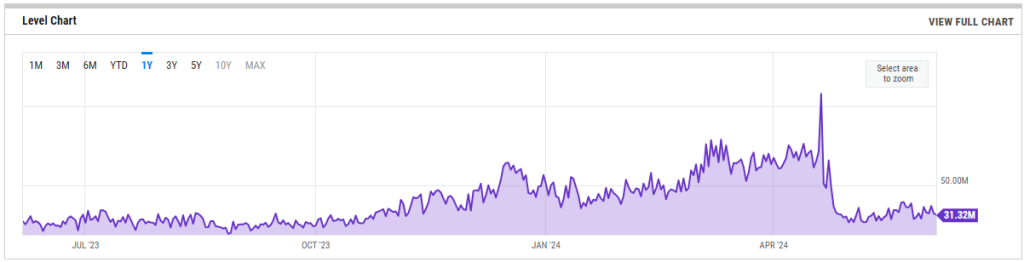
The current state of the mining sector is best illustrated by the "Hash Ribbons" indicator. This metric tracks the 30-day and 60-day moving averages of the network hashrate. When the short-term average falls below the long-term average, it indicates that miners are shutting down their machines—a phenomenon known as capitulation.
Recent data shows a clear spike in these signals, confirming that the industry is shedding its weakest links. However, contrary to traditional bear market narratives, this capitulation is being viewed by some analysts as a "tempting buy signal." According to Capriole Investments, the reduction in mining pressure is a classic precursor to a market rebound.
"Mining pressure" occurs when miners are forced to sell their BTC holdings to cover overhead costs. When miners capitulate or pivot to AI, they are less reliant on selling their daily Bitcoin yield. This reduces the sell-side pressure on the market, which, in a supply-constrained environment post-halving, theoretically supports a higher price floor for Bitcoin.
Implications for the Future of Decentralization
While the integration of AI is a boon for mining firms’ balance sheets, it raises questions regarding the future of the Bitcoin network. Will the shift toward AI-centric data centers favor large, publicly traded companies over individual, decentralized miners?
The industry is clearly trending toward institutionalization. Large-scale data centers, with their ability to secure low-cost energy and scale into AI, are positioned to dominate. This shift likely ensures the long-term security of the Bitcoin network by professionalizing the mining sector, but it also changes the narrative from a "hobbyist-friendly" network to a high-stakes industrial enterprise.
A Silver Lining for Long-Term Bulls
Despite the short-term volatility, the outlook for the ecosystem remains cautiously optimistic. The transition to AI is providing a "floor" for these businesses, preventing the total collapse of mining infrastructure that skeptics predicted would follow the halving.
Simultaneously, institutional interest in Bitcoin remains at an all-time high. With major financial institutions integrating Bitcoin into their portfolios, the "risk-on" sentiment is returning. If the miners can successfully balance their AI operations with their core mission of securing the Bitcoin network, the industry may emerge from this "metamorphosis" stronger, more diversified, and more resilient than ever before.
Conclusion
The "Great Mining Metamorphosis" of 2024 is more than a reaction to reduced revenue; it is a fundamental retooling of the digital infrastructure that underpins the modern web. By bridging the gap between the world of decentralized currency and the world of artificial intelligence, mining firms are securing their relevance in a rapidly changing technological landscape.
As the dust settles, those who survive will likely be the ones who mastered the delicate art of balancing the raw, computational power required to mine a digital asset with the sophisticated, service-oriented needs of the AI revolution. For the long-term investor, this consolidation suggests that while the landscape is changing, the foundation of the Bitcoin network is being reinforced by the very technologies that define our future.
Disclaimer: The information provided in this article is for educational and informational purposes only. It does not constitute financial, investment, or legal advice. Cryptocurrency investments involve high risk, and readers should conduct their own research or consult with a qualified financial advisor before making any investment decisions.