The Illusion of Liquidity: Why Wash Trading Remains Crypto’s Persistent Shadow
In the volatile world of cryptocurrency, trading volume is often treated as the primary heartbeat of market health. It signals liquidity, adoption, and interest. However, behind the flashy dashboards of many digital asset platforms, a darker reality persists. Bobby Ong, co-founder of the prominent data aggregator CoinGecko, has issued a stark warning: the industry’s struggle with wash trading is not only continuing but appears to be intensifying.
Wash trading—the deceptive practice of an entity simultaneously buying and selling the same financial instrument to create the illusion of high market activity—has long been the "dirty little secret" of the crypto exchange space. By artificially inflating volume, bad actors lure unsuspecting retail investors, creating a false sense of security and liquidity where none exists.
The Mechanics of Market Manipulation
At its core, wash trading is a form of market manipulation designed to deceive. An investor, or more commonly a sophisticated bot program operated by an exchange or a market maker, executes a series of buy and sell orders that effectively cancel each other out. Because the trader remains the beneficial owner of the assets throughout the process, there is no change in market position, yet the exchange records a transaction.
This creates a "phantom volume" effect. For an outside observer, such as a casual trader or a retail investor looking at a price aggregator, a high volume suggests that a coin is "liquid" and "in demand." When investors see high volume, they are more likely to place trades on that platform, expecting tight spreads and easy execution. When they find the opposite—wide spreads and slippage—it is often too late.
Chronology: From Wild West to Regulatory Scrutiny
The issue of wash trading is not a modern development; it has shadowed the cryptocurrency market since its inception.
- 2013–2017: The Era of Unchecked Growth: During the initial boom years, there was little oversight. Exchanges popped up globally, many operating with minimal transparency. During this period, wash trading became a standardized growth hack for new exchanges looking to climb the ranks on CoinMarketCap and other aggregators.
- 2018–2019: The Transparency Reckoning: As the industry matured, researchers and data firms began to peel back the layers. Studies by organizations like the Blockchain Transparency Institute (BTI) suggested that over 80% of reported volume on some exchanges was fabricated. This era marked the beginning of the "Trust" movement.
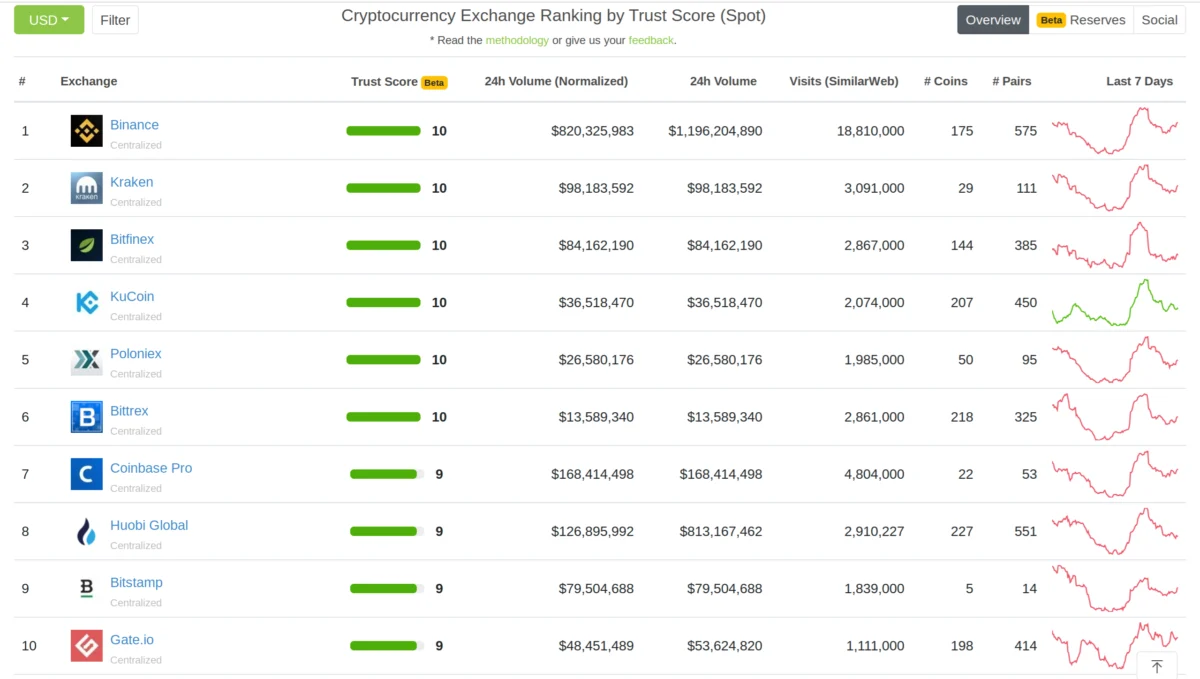
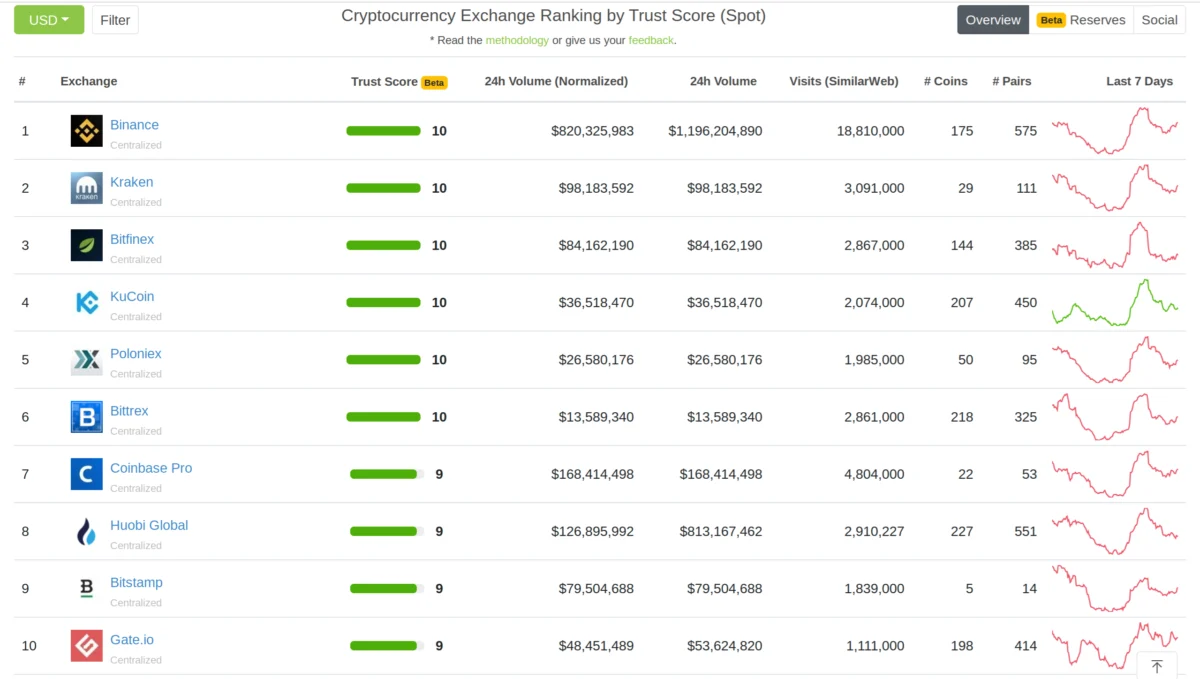
- 2019: The CoinGecko Intervention: In late 2019, Bobby Ong and the team at CoinGecko formally acknowledged the failure of raw reported volume as a metric. They launched the "Trust Score" initiative, moving away from simple volume-based rankings to a multi-factor approach that includes web traffic, order book depth, and regulatory status.
- 2020–2024: The Bifurcation: The industry has since split. On one side, regulated, KYC-compliant exchanges have sought to provide audit-ready data. On the other, decentralized finance (DeFi) and offshore platforms have created new, more complex ways to mask activity, keeping the cat-and-mouse game alive.
The Expert Perspective: Bobby Ong’s Assessment
In a candid interview with BlockTV, Bobby Ong was unequivocal about the state of the market. He noted that despite the industry’s growth, the reliance on self-reported volume has become a dangerous trap for retail participants.
"I would say that the situation is actually getting worse," Ong stated. "The trading volume for the spot market is almost close to not being used as a trusted source anymore. There are so many exchanges that are just wash trading that it’s ridiculous."

Ong suggests that the only way for investors to navigate this minefield is to look exclusively at regulated, licensed entities. He specifically pointed to the United States and Japan as gold standards for regulatory oversight. Exchanges like Coinbase and Gemini, which are subject to stringent SEC and NYDFS oversight, offer data that is far more likely to reflect real-world buying and selling.
"Those regulated exchanges will likely have legit volumes," Ong explained. "Whereas everyone else that is staying in the non-regulated space—we don’t really know which ones are wash trading, which ones are not. It’s hard to say which is real and which is not."
Supporting Data: The Anatomy of Trust
To combat this, CoinGecko implemented a sophisticated rating algorithm. Unlike traditional models that prioritize a single number, the Trust Score utilizes a holistic approach:
- Reported Trading Volume: The starting point, now heavily discounted if other metrics fail to align.
- Order Book Depth: By analyzing the "spread" (the difference between the highest bid and lowest ask), researchers can determine if there is actually enough capital present to support the reported volume. If volume is high but the order book is thin, it is a red flag for wash trading.
- Web Traffic Analysis: By cross-referencing exchange traffic (using tools like SimilarWeb) with reported volume, analysts can spot discrepancies. For example, an exchange with minimal web traffic but billions in daily volume is almost certainly fabricating its numbers.
- Regulatory Compliance: A platform’s location and licensing status serve as a baseline for accountability.
Implications for the Future of Digital Assets
The persistent nature of wash trading has profound implications for the maturation of the crypto asset class.
1. The Institutional Barrier
Institutional investors require "clean" data to build algorithmic models and risk management strategies. If the primary data sources (aggregators) are polluted with fabricated volume, institutional capital will remain sidelined or limited to a handful of "blue-chip" regulated exchanges. This lack of broad liquidity in the "legit" sector keeps volatility high.
2. Retail Vulnerability
Retail investors are the primary victims of this deception. By selecting exchanges based on fake volume, they are often led into "honey pots"—exchanges that may freeze withdrawals or manipulate internal price feeds. As Ong highlighted, the onus of due diligence has shifted entirely onto the user.
3. The Regulatory "Flight to Quality"
The persistence of wash trading is arguably the strongest argument for strict global crypto regulation. If the industry cannot self-regulate to provide honest data, governments will inevitably intervene. We are already seeing this trend, with regulators in South Korea, Hong Kong, and the European Union demanding stricter audit trails for exchange operations.
4. The Shift Toward Decentralization
Ironically, the failure of centralized, opaque exchanges has fueled the growth of Decentralized Exchanges (DEXs). While DEXs are not immune to wash trading (often in the form of "liquidity mining" manipulation), the data is inherently transparent because it exists on-chain. Every trade, wallet address, and liquidity pool interaction is verifiable, potentially rendering the "black box" of centralized wash trading obsolete in the long run.
Conclusion: A Call for Critical Analysis
The warning issued by Bobby Ong serves as a necessary reality check for the crypto community. In an industry defined by its ability to democratize finance, the continued prevalence of wash trading is a regressive force that undermines the very transparency that blockchain technology was intended to provide.
Investors must move beyond the top-line numbers displayed on price tickers. When evaluating an exchange, one should prioritize liquidity depth, regulatory standing, and verified reputation over simple, easily manipulated volume statistics. As the crypto market continues its slow march toward institutional integration, the "Trust Score" approach—prioritizing transparency over volume—is not just a feature; it is a prerequisite for survival.
The era of trusting self-reported numbers is over. In the new, more professional landscape of digital assets, the only currency that matters is, and always will be, trust.
Disclaimer: The information provided in this article is for educational and informational purposes only and does not constitute financial, investment, or legal advice. Cryptocurrency investments are inherently high-risk. Readers should conduct their own thorough research and consult with a qualified financial advisor before making any investment decisions. The author and publisher are not responsible for any losses incurred as a result of trading activity.