Beyond the Block: Dan Loeb’s Third Point and the Institutional Pivot of Bitcoin Miners into AI Infrastructure
By the News Desk | Edited by Samuel Rae
Based on Third Point’s Q2 13F filing, U.S. Securities and Exchange Commission (SEC) disclosures, and market data.
Main Facts
Renowned activist hedge fund Third Point, led by billionaire investor Dan Loeb, has disclosed an equity stake in Bitcoin miner Core Scientific (NASDAQ: CORZ). Revealed in the fund’s Q2 13F filing with the U.S. Securities and Exchange Commission (SEC), Third Point reported a position of 54,000 shares.
While the absolute share volume is modest relative to Third Point’s multi-billion-dollar portfolio, the thematic implication of the trade is significant. This is not a direct play on spot Bitcoin (BTC). Rather, it represents calculated equity exposure to a foundational asset class that has evolved from a pure-play digital asset production model into a high-performance computing (HPC) and artificial intelligence (AI) infrastructure powerhouse.
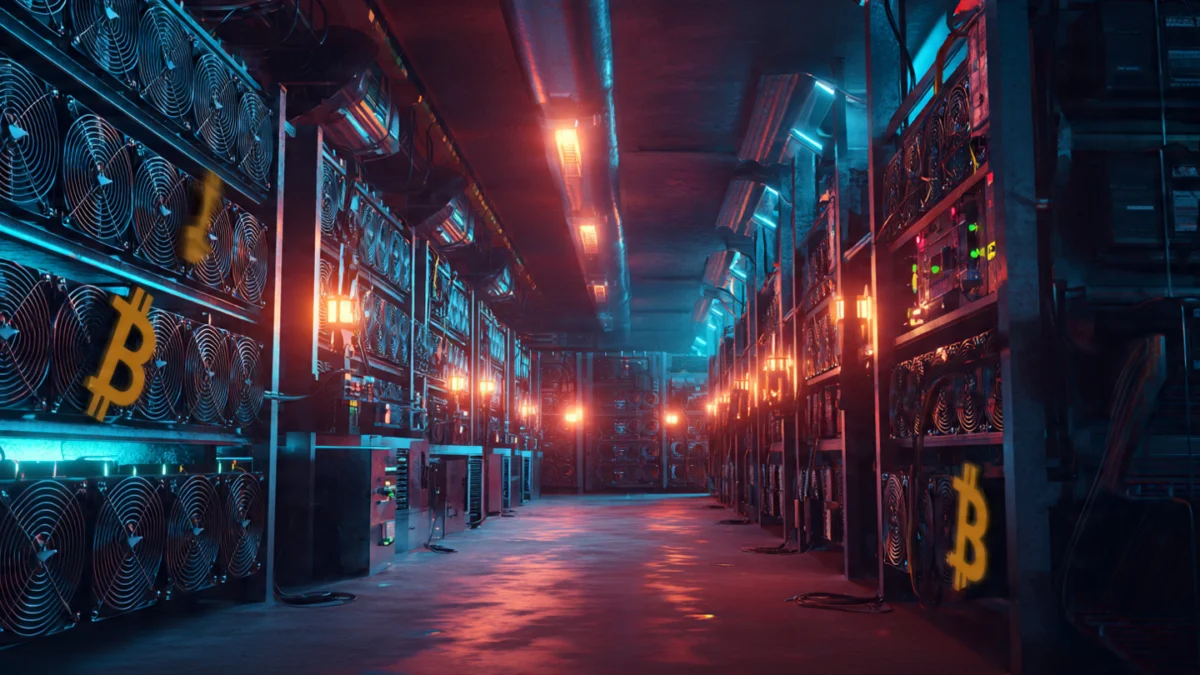
The institutional thesis underpinning this move centers on the repurposing of heavy industrial assets. Bitcoin miners possess scarce, highly coveted resources: massive grid interconnections, multi-megawatt power capacity, available real estate, and sophisticated cooling infrastructure. As the global AI boom strains traditional data center capacity, Wall Street is increasingly evaluating former mining operators not through the volatile lens of cryptocurrency cycles, but as physical infrastructure plays capable of servicing the next major compute cycle.
Chronology of a Sector Transformation
To understand the significance of Third Point’s position in Core Scientific, it is necessary to examine how the Bitcoin mining sector has transformed over the past several years:
- 2020–2021 (The Bull Market Peak): Bitcoin miners operated under a straightforward mandate—deploy as many Application-Specific Integrated Circuit (ASIC) rigs as possible, mine BTC, and hold or sell it into a booming crypto market. Valuations were tightly correlated with the price of Bitcoin, often trading as leveraged proxies for the underlying asset.
- 2022–2023 (The Crypto Winter & Restructuring): Following the collapse of major crypto lenders and a protracted bear market, many prominent miners faced severe liquidity crunches, crushing debt loads, and operational distress. Core Scientific itself navigated a Chapter 11 bankruptcy restructuring during this period, emerging with a cleaner balance sheet and an urgent need to optimize its physical footprint.
- Early 2023–Late 2023 (The Generative AI Inflection): The explosive growth of Large Language Models (LLMs) triggered an unprecedented global shortage of power and data center capacity. Tech giants and AI startups began scouting for massive blocks of power. Industry participants quickly realized that Bitcoin data centers—built specifically for high-density power consumption—could be retrofitted for AI and HPC workloads.
- 2024 (The Convergence of Compute and Crypto): Major cloud service providers and AI developers began locking down multi-billion-dollar hosting agreements with crypto miners. Core Scientific cemented its position in this arena through high-profile infrastructure contracts, notably partnering with AI cloud provider CoreWeave.
- Q2 2024 (Institutional Validation): Third Point’s 13F filing captures this institutional inflection point, revealing that sophisticated macro and event-driven funds are taking notice of the sector’s structural pivot away from pure crypto dependency.
Supporting Data and Market Dynamics
Examining Third Point’s filing alongside broader market trends highlights why institutional capital is re-evaluating the mining sector:
- The Position Size: Third Point disclosed 54,000 shares of Core Scientific. While small enough to represent an exploratory or tactical allocation, 13F filings reflect snapshots at the end of a quarter and do not preclude subsequent accumulation or derivative positioning.
- Power as the Ultimate Currency: In the modern digital economy, electrical grid access has become a bottleneck. Major AI data centers require continuous, high-density power blocks ranging from 50 megawatts to over 1 gigawatt. Bitcoin miners had already secured these power purchase agreements (PPAs) in remote or underutilized geographic regions.
- Valuation Multiples: Traditional data center operators and digital infrastructure real estate investment trusts (REITs) frequently trade at high enterprise value-to-EBITDA multiples based on long-term, stable lease agreements. In contrast, Bitcoin miners have historically suffered from depressed multiples due to commodity price volatility and the quadrennial block reward halving.
- The Halving Pressure: Following the April 2024 Bitcoin halving—which slashed block rewards from 6.25 BTC to 3.125 BTC per block—miners faced immediate margin compression. Diversifying into AI hosting provides a predictable, fiat-denominated revenue stream that acts as a natural hedge against declining crypto mining profitability.
Official Responses and Regulatory Context
Because the transaction was revealed via mandatory regulatory disclosures rather than an active corporate announcement, neither Dan Loeb nor Third Point management has issued a detailed public manifesto explaining the specific calculus behind the Core Scientific trade. However, public filings submitted to the SEC via EDGAR provide the regulatory foundation of the investment.
In broader industry commentary, executives across the mining and AI sectors have been vocal about this convergence. Core Scientific’s leadership, along with peers such as Hut 8, TeraWulf, and Iris Energy, have repeatedly emphasized in earnings calls that their primary competitive advantage is no longer merely their fleet of mining rigs, but their master-planned electrical infrastructure and grid interconnect agreements.
From a regulatory perspective, holding public equities in infrastructure-heavy mining corporations allows traditional institutional funds—such as pension funds, endowments, and hedge funds bound by strict asset mandates—to gain indirect exposure to the digital asset ecosystem without navigating the complex custody, accounting, and regulatory compliance hurdles associated with holding physical spot cryptocurrency.
Implications for Crypto and Traditional Markets
The entry of institutional heavyweights like Third Point into the Bitcoin mining equity space carries far-reaching consequences for multiple asset classes:
1. Decoupling from Bitcoin Price Volatility
For years, investing in a Bitcoin mining stock meant accepting extreme beta relative to the spot price of BTC. If Bitcoin dropped 10%, mining equities frequently dropped 20% or more due to operating leverage. If miners successfully transition a meaningful percentage of their power capacity to long-term, fixed-fee AI hosting contracts, their cash flows become more diversified. Consequently, their valuation models may begin to resemble traditional utility or data center businesses rather than speculative crypto proxies.
2. A New Paradigm for Capital Allocation
Wall Street is beginning to view energy infrastructure as the fundamental bottleneck of the 21st-century technological landscape. Funds that historically avoided crypto assets entirely are now finding an acceptable entry point through the "picks and shovels" of the AI revolution, even when those tools were originally forged for proof-of-work mining.
3. Execution Risk and Market Differentiation
Despite the bullish narrative, significant hurdles remain. Transitioning a facility designed for ASICs into a Tier-3 or Tier-4 AI data center is neither simple nor cheap. AI workloads demand specialized liquid-cooling systems, high-bandwidth networking gear (such as Nvidia InfiniBand or advanced Ethernet switches), and rigorous enterprise-grade uptime standards.
Not every Bitcoin miner possesses the technical expertise, balance-sheet strength, or customer relationships required to execute this pivot successfully. Analysts warn that while the sector-wide narrative is compelling, market bifurcation is inevitable: winners will successfully secure lucrative hyperscaler contracts, while laggards may remain trapped in the traditional, low-margin mining cycle.
Conclusion
Dan Loeb’s Third Point taking a position in Core Scientific is emblematic of a broader structural evolution. It underscores a fundamental shift in how institutional capital perceives digital asset infrastructure: not merely as a volatile bet on the price of a digital coin, but as foundational, hard-asset real estate capable of powering the future of global computing. Whether this trade marks the beginning of a wholesale institutional reassessment of the mining sector will depend heavily on execution, but the blueprint has officially been drawn.