
Bitcoin Miners Offload Record Holdings in Q1 2026 Amid Severe Margin Squeezes and Surging Operational Pressures
By Financial Markets Desk
Published: April 2026
Main Facts
The global Bitcoin mining sector is facing one of its most punishing economic environments in recent history. Approximately 20% of the entire Bitcoin mining industry is currently operating at a net loss. This stark reality has driven public-market operators to aggressively liquidate their treasury reserves simply to cover operational costs, power overheads, and debt obligations.
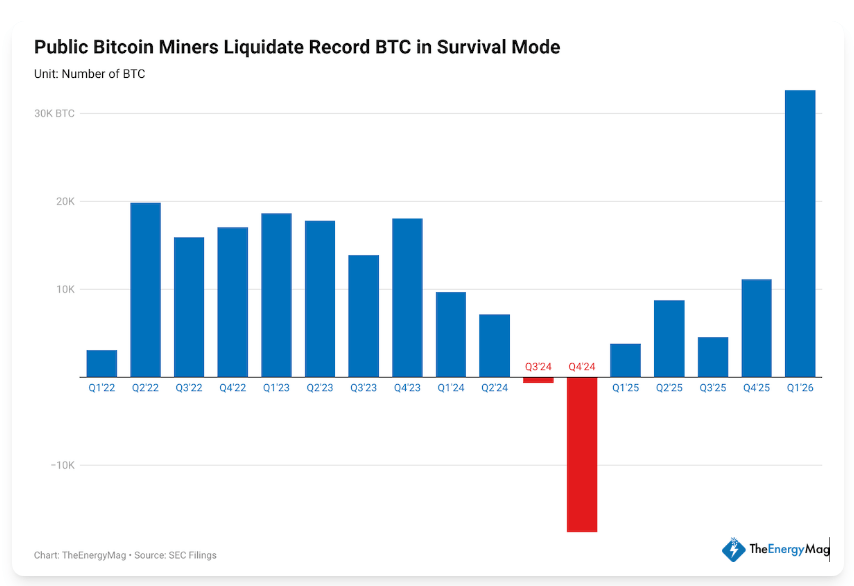
During the first three months of 2026, major publicly traded Bitcoin mining enterprises—including MARA, CleanSpark, Riot Platforms, Cango, Core Scientific, and Bitdeer—collectively offloaded more than 32,000 BTC. This volume is unprecedented for a single quarter, comfortably eclipsing the total amount these same entities liquidated across all four quarters of 2025 combined. Furthermore, it shatters the previous historical record of approximately 20,000 BTC sold in a single quarter, a milestone set during the catastrophic collapse of the Terra-Luna ecosystem in Q2 2022.
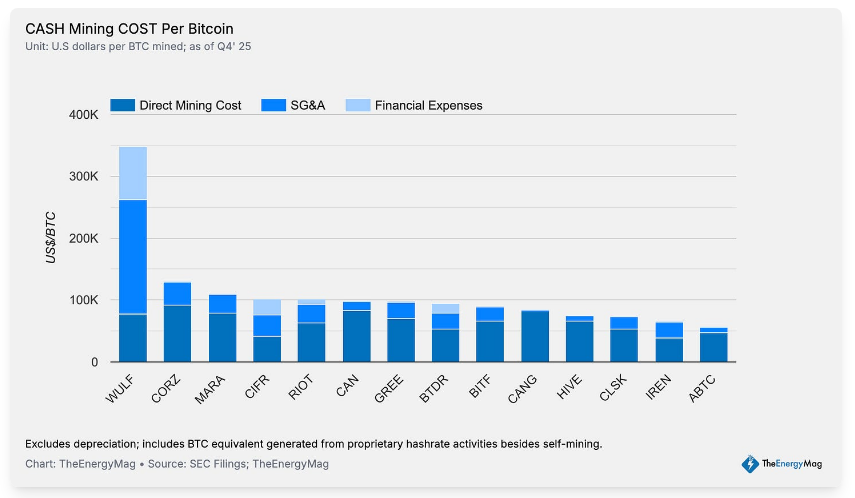
The root cause of this distress lies in compressed profit margins. Hashprice, a critical industry metric denoting the daily revenue a miner generates per unit of computing power, has been on a downward trajectory since July 2025. Data from Hashrate Index reveals that hashprice now hovers around $33 per petahash per second per day ($33/PH/s/day). Meanwhile, the estimated breakeven point for a large segment of the industry—particularly those reliant on older-generation application-specific integrated circuit (ASIC) hardware—sits at roughly $35. That narrow $2 deficit has pushed a significant portion of the network into the red, forcing a high-stakes survival mode across the sector.
Chronology of the Crisis: A Multi-Year Retrospective
To understand how the Bitcoin mining sector arrived at this critical juncture in early 2026, it is necessary to examine the cascading macroeconomic and structural forces that have built up over the past several years.

2023–2024: The Gradual Drain of Miner Reserves
The capitulation seen in early 2026 did not happen overnight. On-chain data compiled by CryptoQuant indicates that total Bitcoin reserves held by network miners have been on a steady downward slope since 2023. At the close of 2023, miners collectively held upwards of 1.86 million BTC in their treasuries, acting as a powerful macro cushion. However, escalating hardware costs, facility expansions, and fluctuating energy prices forced a slow but persistent bleed. By the end of 2025, that aggregate reserve had dwindled to roughly 1.8 million BTC. The aggressive liquidation of 32,000 BTC in Q1 2026 alone served to accelerate a structural drainage trend that had been quietly unfolding for over two years.
July 2025: The Onset of the Hashprice Slide
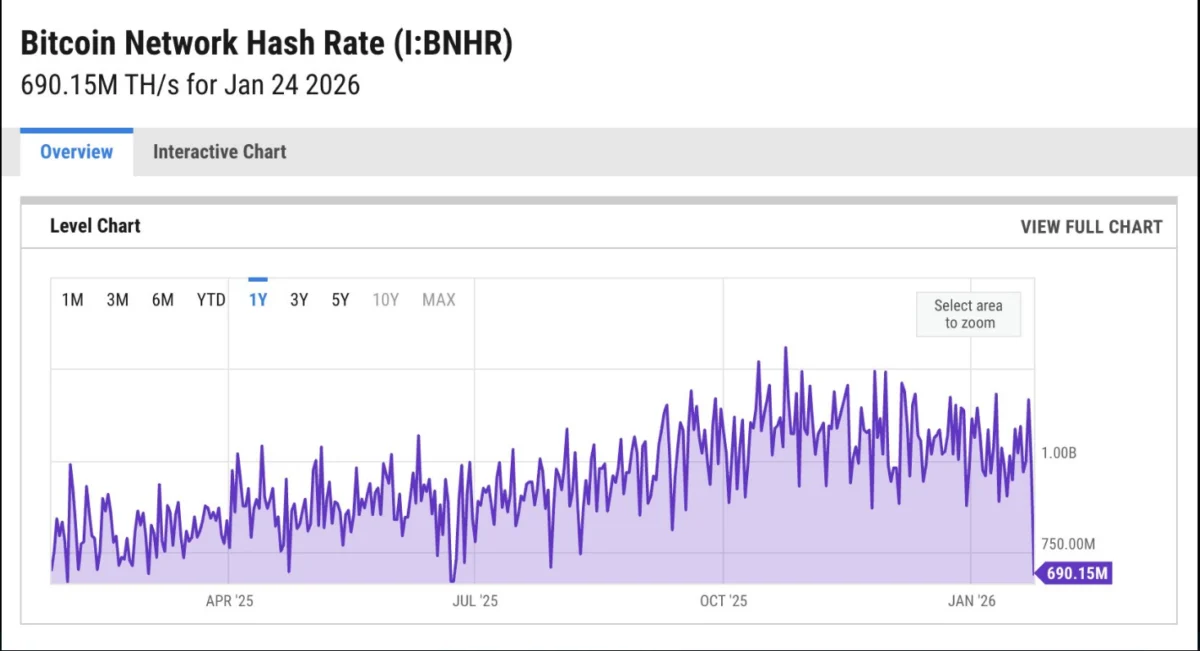
The inflection point for the current crisis occurred in the summer of 2025. Following a period of relative post-halving stability, hashprice began a persistent descent. As global competition intensified and the total network hashrate climbed to new all-time highs, the daily revenue earned per unit of mining hardware failed to keep pace with escalating electricity and infrastructure expenses.
Q1 2026: The Liquidation Wave
Entering 2026, the convergence of macroeconomic headwinds, suppressed Bitcoin spot prices, reduced block rewards, and elevated difficulty adjustments created a mathematical impossibility for marginal operators. Publicly traded miners, bound by shareholder reporting and immediate liquidity needs, chose to tap their long-held Bitcoin treasuries. The resulting sell-off peaked in March 2026, flooding the open market with tens of thousands of coins and setting historic quarterly records for miner-initiated supply pressure.
Supporting Data and Market Metrics
The scale of the 2026 mining crisis is comprehensively outlined by several key industry metrics and institutional reports:
- Hashprice Realities: Current hashprice rests at approximately $33 per petahash per second daily, falling short of the $35 industry-wide breakeven threshold for legacy machinery.
- Record Quarterly Outflows: Major public miners (MARA, CleanSpark, Riot, Cango, Core Scientific, and Bitdeer) liquidated upwards of 32,000 BTC in Q1 2026.
- Historical Comparison: The Q1 2026 sell-off easily surpassed the previous record of 20,000 BTC established in Q2 2022 during the Terra-Luna crisis, and outstripped the cumulative sales of all four quarters of 2025.
- Declining Reserves: Total miner-held Bitcoin has dropped from over 1.86 million BTC at the end of 2023 to approximately 1.8 million BTC in early 2026.
- Spot Market Context: Concurrently, benchmark spot assets such as BTC/USD have traded in volatile consolidation ranges, testing critical macro supports near the $75,000 region on daily TradingView charts, compounding the difficulty for distressed sellers.
Official Responses and Institutional Assessments
Industry analysts, asset managers, and corporate insiders have offered candid assessments regarding the trajectory of the mining sector and the broader digital asset ecosystem.
CoinShares Q1 2026 Report
In its flagship Q1 2026 Bitcoin Mining Report, prominent asset manager CoinShares issued a blunt warning to stakeholders. The financial institution noted that higher-cost mining operators should prepare for prolonged operational pain and potential structural capitulation through the first half of the year. CoinShares emphasized that unless the spot price of Bitcoin experiences a dramatic, sustained recovery, sub-optimal facilities will be forced to unplug, restructure, or seek emergency M&A (mergers and acquisitions) pathways.
The Divergence of Corporate Treasuries: Michael Saylor and Strategy
While mining entities are aggressively divesting their digital assets to survive, corporate treasury buyers are moving in the opposite direction, absorbing the newly liberated supply. Strategy, the world’s largest corporate holder of Bitcoin, has continued its relentless accumulation strategy despite near-term market volatility.
Signaling further intent to expand the company’s digital asset footprint, co-founder Michael Saylor took to social media platform X (formerly Twitter) in April 2026. By sharing Strategy’s long-term Bitcoin acquisition chart accompanied by the directive to "Think bigger," Saylor signaled to global markets that another substantial corporate purchase was imminent. This counter-cyclical buying behavior highlights a profound structural shift: distressed mining operations are shedding coins to legacy balance sheets and corporate institutional treasuries with deep cash reserves.
Broader Implications for the Bitcoin Ecosystem
The unfolding crisis among Bitcoin miners carries significant long-term implications for the decentralized network and the wider cryptocurrency market structure.
1. Centralization and Consolidation of Hashrate
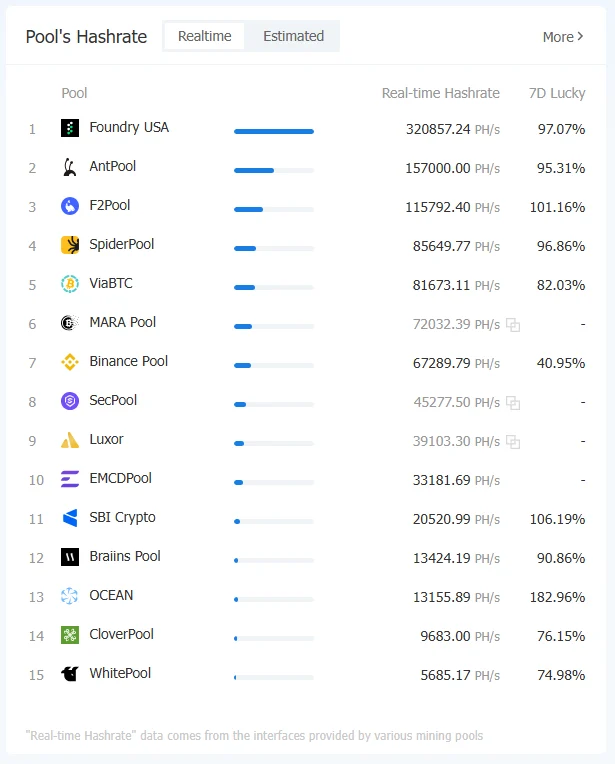
The forced capitulation of smaller, high-cost miners accelerates an industry consolidation trend. Well-capitalized operators with access to low-cost, long-term energy contracts (such as nuclear, hydro, or curtailed renewable power) are uniquely positioned to acquire distressed competitor assets, including state-of-the-art ASIC hardware and physical data center infrastructure at a steep discount. Consequently, the global hashrate may concentrate further into the hands of a few dominant, publicly traded mining conglomerates.
2. Difficulty Adjustments and Network Self-Regulation
As unprofitable miners are forced to unplug their rigs, the aggregate network hashrate will inevitably experience downward adjustments. This contraction triggers automatic protocol-level responses via Bitcoin’s built-in difficulty adjustment mechanism. As mining difficulty drops, the remaining operational miners will experience an immediate relief in profit margins, re-establishing economic equilibrium and lowering the breakeven threshold for active participants.
3. Supply Dynamics and Market Absorption
The heavy sell-side pressure exerted by miners liquidating 32,000+ BTC in a single quarter creates a temporary supply overhang on spot exchanges. However, the aggressive counter-cyclical accumulation by corporate treasuries—exemplified by Strategy and various spot Bitcoin Exchange-Traded Funds (ETFs)—demonstrates that the market possesses robust mechanisms to absorb miner-induced liquidity.
As the industry navigates the remainder of 2026, the resilience of the Bitcoin network will once again be tested. While high-cost operators face severe operational headwinds, the underlying economic pruning serves its historical purpose: purging inefficiencies, reallocating hashpower to lower-cost jurisdictions, and transferring digital asset reserves into the hands of well-capitalized institutional balance sheets.