Bitcoin has officially crossed one of the most critical psychological and mathematical thresholds in its 17-year history. On Sunday, miners successfully extracted the network’s 20 millionth coin, bringing the total circulating supply to 95.24% of its hard-capped limit of 21 million.
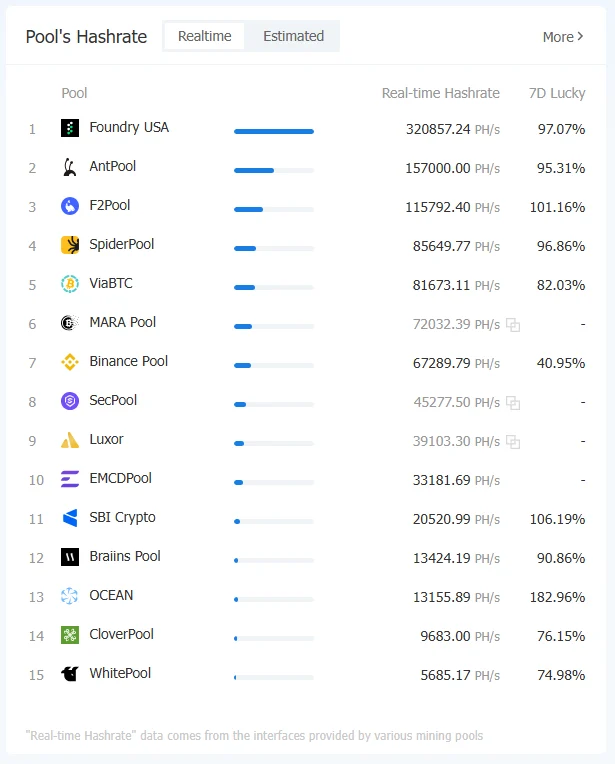
The historic milestone occurred precisely 17 years, two months, and one week after the genesis block was mined by the pseudonymous creator Satoshi Nakamoto in January 2009. The landmark 20 millionth Bitcoin was unearthed by the prominent mining pool Foundry USA at block height 939,999, yielding the standard block reward of 3.125 BTC.
This supply event underscores the core economic design of the world’s leading cryptocurrency: absolute scarcity. With 20 million coins now generated, the remaining 1 million Bitcoins will take over a century to enter circulation. The last full Bitcoin is projected to be mined sometime in the 2090s, with fractional units—known as satoshis—continuing to trickle out until the final fraction is produced around the year 2140.
However, a closer look at blockchain analytics reveals a paradox at the heart of Bitcoin’s liquidity. While 20 million coins have technically been minted, millions of them are permanently out of circulation, trapped behind lost private keys, forgotten passwords, and unspendable genesis scripts. As the asset trades around the $70,000 region—navigating macroeconomic crosswinds and geopolitical tensions—the crossing of the 20 million mark forces a long-overdue industry conversation about miner sustainability, effective circulating supply, and the deflationary future of digital money.
Chronology
To understand the magnitude of reaching 20 million mined Bitcoins, it is essential to retrace the timeline of the network’s issuance velocity and algorithmic design:
January 2009 (Block 0): The Bitcoin genesis block is mined, establishing a reward of 50 BTC per block and introducing the world to decentralized, cryptographically secured currency.
November 2012 (First Halving): The block reward drops from 50 BTC to 25 BTC. By this time, a significant portion of the early supply has already been distributed to a small cohort of cryptography enthusiasts and miners.
July 2016 (Second Halving): The reward is cut in half again to 12.5 BTC per block. Bitcoin begins capturing mainstream financial attention during the subsequent 2017 bull run.
May 2020 (Third Halving): Amid unprecedented global monetary stimulus during the COVID-19 pandemic, the block reward drops to 6.25 BTC.
April 2024 (Fourth Halving): Daily network production is slashed from 900 BTC to roughly 450 BTC, setting the current block reward at 3.125 BTC.
Sunday (Block 939,999): Foundry USA mines the 20 millionth Bitcoin. Out of the 21 million hard cap, 95.24% of the asset’s total lifetime supply has now been unlocked.
April 11, 2028 (Projected Fifth Halving): The block reward is scheduled to drop by half once again, moving from 3.125 BTC down to 1.5625 BTC.
The 2040s and Beyond: Daily issuance will fall below 30 BTC in the 2040s and under 2 BTC by the 2060s.
The 2090s: The final full Bitcoin is expected to be mined.
Circa 2140: The final satoshi is generated, completing Bitcoin’s predetermined 121-year issuance schedule.
Supporting Data
The mathematics governing Bitcoin’s issuance are immutable, written directly into the core protocol code. Yet, raw issuance figures tell only part of the story when evaluating the asset’s true market dynamics.
1. Issuance Metrics
Total Hard Cap: 21,000,000 BTC
Coins Mined to Date: 20,000,000 BTC (95.24%)
Coins Remaining: 1,000,000 BTC (4.76%)
Current Daily Production: ~450 BTC (post-2024 halving)
Timeframe for Remaining Supply: ~114 years (stretching to ~2140)
2. The Illusion of Full Liquidity: Lost Coins
While the ledger shows 20 million coins in existence, empirical research from blockchain analytics powerhouses such as Chainalysis and River Financial paints a sobering picture of actual circulating availability.
Early Era Casualties: Estimates indicate that between 1.8 million and 3.7 million BTC are lost forever. In Bitcoin’s infancy, when the asset possessed virtually no monetary value, storage practices were rudimentary. Early miners and adopters frequently formatted hard drives, discarded old laptops, or lost paper wallets containing thousands of coins.
Unspendable Scripts: Approximately 230 BTC remain permanently locked in the genesis block and early outputs, written using legacy code scripts that cannot interact with modern spending functions.
Adjusted Circulatory Pool: Factoring in lost and irretrievable coins, the actual liquid supply available for institutional accumulation, retail trading, and treasury reserves is estimated to sit significantly below the 19 million mark. This creates a supply squeeze far more severe than headline figures suggest.
3. Market Context
At the time of the 20 million milestone, Bitcoin was changing hands around $70,000, reflecting a resilient recovery despite dropping roughly 21% year-to-date from previous cyclical highs. Macroeconomic pressures, fluctuating interest rate expectations, and localized geopolitical conflicts in the Middle East have introduced volatility, yet the asset managed a 3.44% gain over the week leading up to the milestone, proving its structural demand remains robust.
Official Responses and Industry Commentary
The crossing of the 20 million threshold has drawn reactions from across the cryptocurrency ecosystem, spanning institutional analysts, mining executives, and protocol developers.
Speaking on the implications of the milestone, financial analysts at major digital asset brokerages emphasized the psychological shift among investors.
"Reaching 20 million coins is a stark reminder to traditional finance that Bitcoin’s rules cannot be altered by central bank decree or political whim," noted a senior market strategist at a digital asset fund. "When investors realize that only one million coins are left to be mined over the next century—and that millions of the existing coins are sitting quietly in cold storage or lost to history—the conversation shifts from price volatility to absolute structural scarcity."
Mining executives, however, are looking past the celebratory metrics toward the mechanical reality of shrinking block rewards. Representatives from Foundry USA and other major mining pools point out that while historical supply milestones generate headlines, the underlying economics of securing the network are entering a transitional phase.
"Every halving and every major supply milestone brings us closer to a fee-driven security model," stated a leading infrastructure engineer within the North American mining sector. "Miners cannot rely indefinitely on block subsidies. The long-term health of the network depends on the maturation of Layer-2 scaling solutions and sustained transactional demand that generates healthy fee revenue."
Implications
The transition past the 20 million Bitcoin mark carries profound implications for the future of digital asset markets, macroeconomic theory, and network security.
1. Accelerated Supply Squeeze
With less than 5% of Bitcoin’s total supply left to be mined, the marginal cost of acquiring large blocks of liquidity will escalate dramatically in future market cycles. If institutional adoption—driven by corporate treasuries, pension funds, and sovereign interest—continues to accelerate while daily issuance remains capped at a meager 450 BTC (dropping to 225 BTC in 2028), the supply-demand imbalance could trigger unprecedented upward price pressures.
2. The Miner Revenue Dilemma
The most critical long-term implication of depleting the remaining 1 million coins centers on miner economics. As block subsidies approach zero over the coming decades, transaction fees will become the sole economic incentive keeping miners online to secure the ledger.
This creates a delicate design challenge:
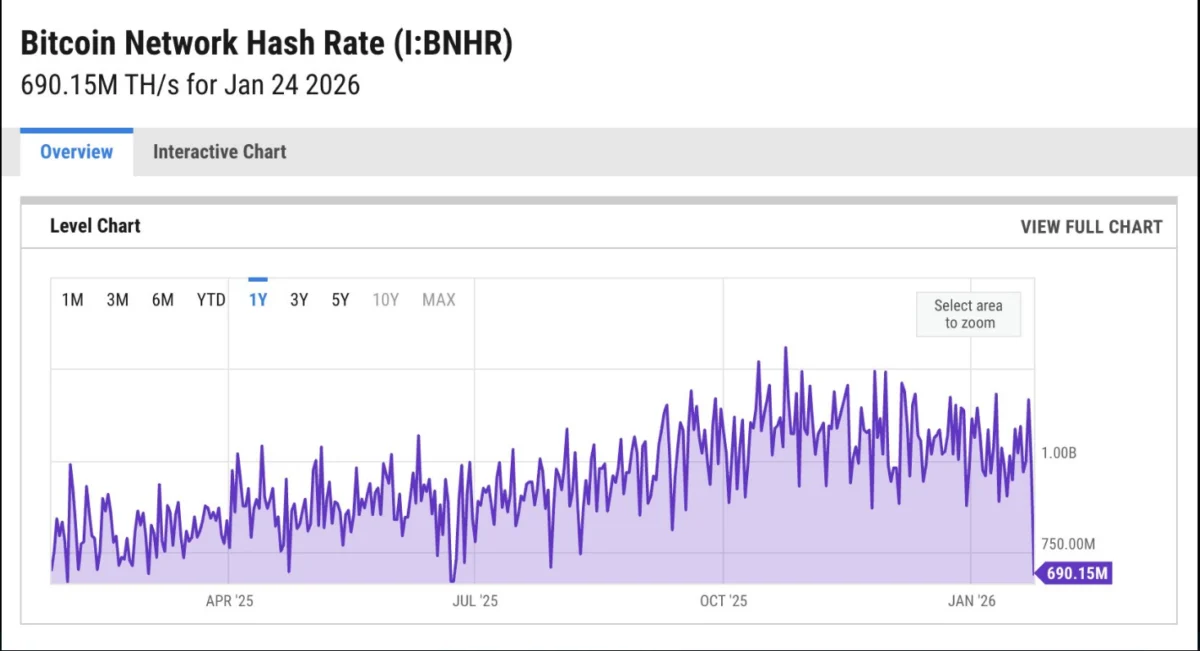
If transaction fees are too low, mining operations may shut down en masse, temporarily reducing network hashrate and security.
If transaction fees are too high, everyday utility and on-chain transacting could become prohibitively expensive for standard users.
The industry is betting heavily on Layer-2 architectures—such as the Lightning Network and rollups—to handle high-volume, low-value transactions, ensuring that the base layer remains a high-fee settlement network for institutional and high-value transfers.
3. A Deflationary Paradigm Shift
In a global financial landscape defined by persistent fiat currency expansion, government debt, and inflationary monetary policy, Bitcoin’s hard cap of 21 million serves as a radical counter-experiment. Crossing the 20 million threshold solidifies Bitcoin’s status as the most mathematically predictable asset class in human history. As the final million coins take over a century to trickle out, Bitcoin transitions fully from a speculative technological startup asset into a mature, scarcer-than-gold digital store of value.