CleanSpark Shatters Industry Milestones, Surpassing 30 EH/s Operational Hashrate Following Strategic Mississippi Acquisition
By the News Desk | Edited by Samuel Rae
Published in Financial & Crypto Markets
Main Facts
Bitcoin mining heavyweight CleanSpark has officially surpassed a monumental operational threshold, expanding its deployed hashrate beyond the 30 exahashes per second (EH/s) mark. This milestone was achieved ahead of schedule following the successful completion and integration of two state-of-the-art data center facilities located in Mississippi.
The strategic acquisition immediately injects 75 megawatts (MW) of operational power capacity into CleanSpark’s growing infrastructure ecosystem. In the capital-intensive and fiercely competitive landscape of digital asset mining, this development cements the firm’s status as a top-tier publicly traded Bitcoin mining enterprise. However, industry analysts caution that while raw hashrate expansion is a primary indicator of corporate scale, it does not act as a direct, linear multiplier for monthly Bitcoin production. Actual yields remain subject to a shifting matrix of network difficulty adjustments, equipment uptime, energy costs, and broader macroeconomic hashprice dynamics.
Key Highlights:
- The Milestone: CleanSpark’s operational deployed hashrate has officially crossed 30 EH/s.
- The Catalyst: The acquisition of two advanced data center facilities in Mississippi.
- Power Addition: A direct injection of 75 MW of reliable operational power capacity.
- Strategic Positioning: Solidifies CleanSpark’s footing among elite tier-one public Bitcoin miners in a post-halving market environment.
Chronology of Expansion: The Road to 30 EH/s
To understand the significance of CleanSpark’s latest achievement, it is necessary to examine the timeline of aggressive capital deployment and strategic acquisitions that defined the company’s trajectory over the past several cycles.
The Post-Halving Landscape and Infrastructure Consolidation
Following the Bitcoin network’s fourth halving event, which slashed block subsidies from 6.25 BTC to 3.125 BTC, the mining sector entered a survival-of-the-fittest paradigm. Smaller, undercapitalized operations faced immediate margin compression due to reduced revenues coupled with persistent energy costs. CleanSpark, conversely, adopted an aggressive counter-cyclical growth strategy.
Throughout late 2023 and well into 2024, management systematically targeted undervalued infrastructure, securing power-heavy facilities across various U.S. jurisdictions. The strategy centered on owning the underlying real estate and power sub-stations rather than merely purchasing application-specific integrated circuit (ASIC) machines.
The Mississippi Expansion Phase
The groundwork for the recent 30 EH/s breakthrough was laid months prior through negotiations to acquire operational data center assets in Mississippi. By absorbing these two facilities, CleanSpark bypassed the lengthy greenfield development, permitting, and grid-connection timelines that typically plague industrial energy projects.
Upon closing the transaction, engineering teams rapidly integrated the newly acquired data centers into the company’s proprietary fleet management systems. By energizing the imported infrastructure and deploying next-generation mining rigs, CleanSpark’s operational hashrate climbed past the coveted 30 EH/s threshold weeks ahead of internal projections.
Supporting Data & Market Metrics
In the world of professional digital asset analysis, metrics dictate valuation. Understanding how CleanSpark’s 30 EH/s compares to broader industry realities requires a granular look at the data governing modern proof-of-work mining.
Hashrate Versus Nameplate Capacity
A critical distinction must be made between operational deployed hashrate and theoretical nameplate capacity.
- Nameplate Capacity: Represents the maximum mathematical output of all purchased ASICs running under ideal, laboratory conditions.
- Operational Deployed Hashrate: Represents machines physically racked, wired, cooled, powered, and actively hashing on the blockchain network at any given moment.
CleanSpark’s announcement specifically highlighted operational deployed hashrate. This reassures institutional investors that the 30+ EH/s figure represents active revenue-generating machinery rather than unboxed hardware sitting in warehouses.
The Power Equation (75 MW Breakdown)
Electricity is the single largest operational expenditure for any Bitcoin miner, often accounting for 70% to 80% of ongoing variable costs. The addition of 75 MW of operational power capacity in Mississippi translates to significant scaling potential:
| Metric | Value / Description |
|---|---|
| New Power Capacity | 75 Megawatts (MW) |
| Asset Class | Operational Data Center Facilities |
| Geographic Location | Mississippi, United States |
| Primary Beneficiary Equipment | Next-Generation ASIC Mining Rigs |
| Target Sector Impact | Top-Tier Public Miner Market Share Expansion |
Assuming an average consumption profile for modern high-efficiency rigs (such as the Antminer S21 series operating at roughly 17.5 to 20 joules per terahash), 75 MW can power tens of thousands of contemporary miners, directly contributing to the exponential leap in network participation.
Official Responses and Corporate Statements
Management and executive leadership have framed the 30 EH/s achievement not merely as a numerical vanity metric, but as proof of disciplined execution during a turbulent macroeconomic epoch.
In corporate releases detailing the Mississippi transaction, CleanSpark executives emphasized that infrastructure control remains the ultimate moat in modern digital asset operations. While competitors frequently rely on hosting agreements—which can introduce counterparty risk and margin-squeezing fee structures—CleanSpark’s ownership-heavy model provides direct command over energy procurement and site management.
Furthermore, investor relations communications underscored that passing the 30 EH/s milestone validates the company’s capital allocation strategy. By funding expansions through a balanced mix of equity, debt, and judicious balance-sheet Bitcoin holdings, the firm has avoided the over-leveraged pitfalls that forced several legacy competitors into restructuring during previous crypto winters.
Broader Implications for the Bitcoin Mining Sector
The implications of CleanSpark crossing the 30 EH/s threshold extend far beyond corporate balance sheets, signaling several structural shifts within the global Bitcoin mining industry.
1. The Era of Industrial Consolidation
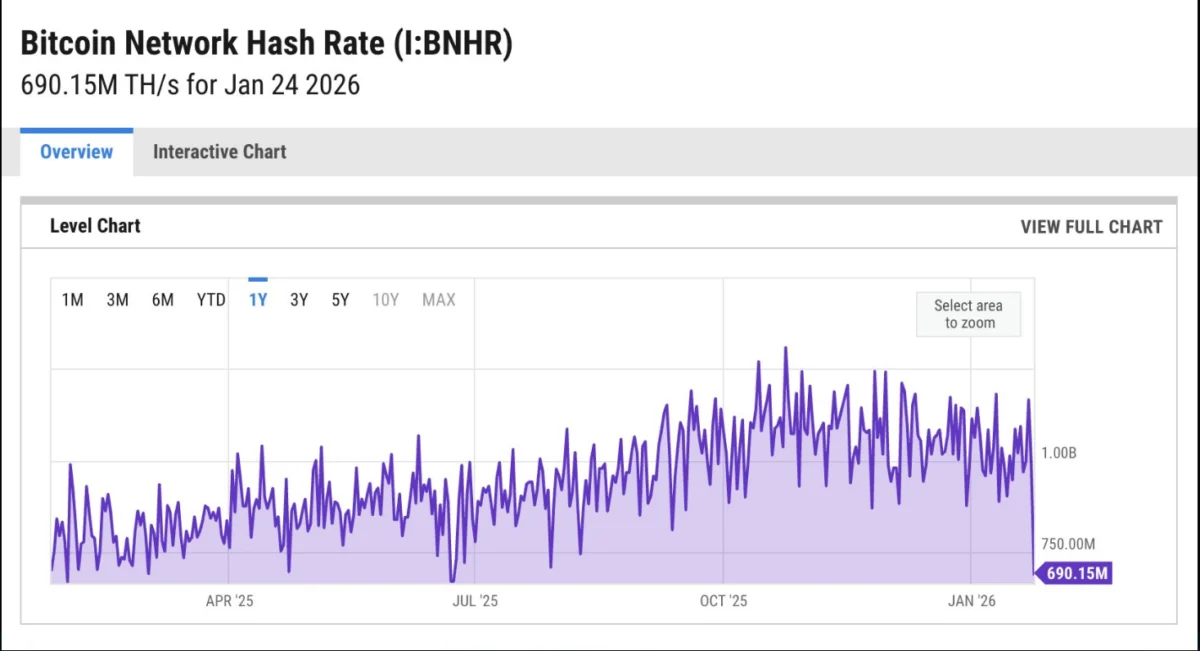
The days of hobbyist mining or small-scale regional operations commanding significant network share are effectively over. With global hashrate sitting at historic highs, mining has firmly transitioned into an institutional-grade, heavy-infrastructure sector. Companies capable of securing multi-megawatt power purchase agreements (PPAs) and building institutional-grade data centers are poised to absorb market share from weaker players.
2. The Convergence of Bitcoin Mining and High-Performance Computing (HPC)
A notable trend sweeping the mining sector is the strategic pivot toward Artificial Intelligence (AI) and High-Performance Computing (HPC). Power-dense data centers equipped with robust cooling infrastructure are increasingly viewed as dual-purpose assets. While CleanSpark remains explicitly focused on scaling its Bitcoin mining operations, the acquisition of prime energy infrastructure in regions like Mississippi highlights the growing intrinsic value of raw electrical access. Data centers with secured power allocations possess valuable strategic optionality, allowing firms to pivot workloads based on whether hashprice or AI cloud-computing yields higher profit margins.
3. Hashrate Does Not Equal Guaranteed BTC Yield
A common misconception among retail market participants is that a linear increase in a company’s hashrate results in a proportional, predictable increase in monthly Bitcoin mined. This assumption ignores the dynamic nature of the Bitcoin network.
Because network difficulty adjusts automatically roughly every two weeks based on global participation, an individual miner’s output is always relative to the total global hashrate. If the global hashrate expands faster than an individual company’s fleet growth, that company’s relative share of the block rewards can actually decline—even as its absolute hashrate increases. Consequently, investors must analyze uptime efficiency, fleet energy efficiency (J/TH), and prevailing hashprice environments alongside raw capacity milestones.
Conclusion and Future Outlook
CleanSpark’s successful integration of the Mississippi data center facilities and its triumphant march past the 30 EH/s threshold mark a defining chapter in the company’s corporate history. By prioritizing operational power capacity and infrastructure ownership, the firm has reinforced its defensive and offensive positioning within the post-halving mining economy.
However, as the industry matures, the market will continue to demand accountability beyond headline milestones. For CleanSpark and its peers, the ultimate test will lie in consistent execution: maintaining high fleet uptime, optimizing energy costs against volatile grid pricing, and navigating future network difficulty adjustments.
For investors monitoring the sector, the playbook is clear. Scale provides the necessary foundation to compete, but operational discipline and rigorous execution are what ultimately determine whether that scale translates into sustainable, long-term shareholder value. The coming quarters will reveal how effectively CleanSpark can monetize its expanded 75 MW footprint in Mississippi against an increasingly competitive global backdrop.