
Institutional Crypto Selloff: $414 Million Exits Market Amid Geopolitical Uncertainty
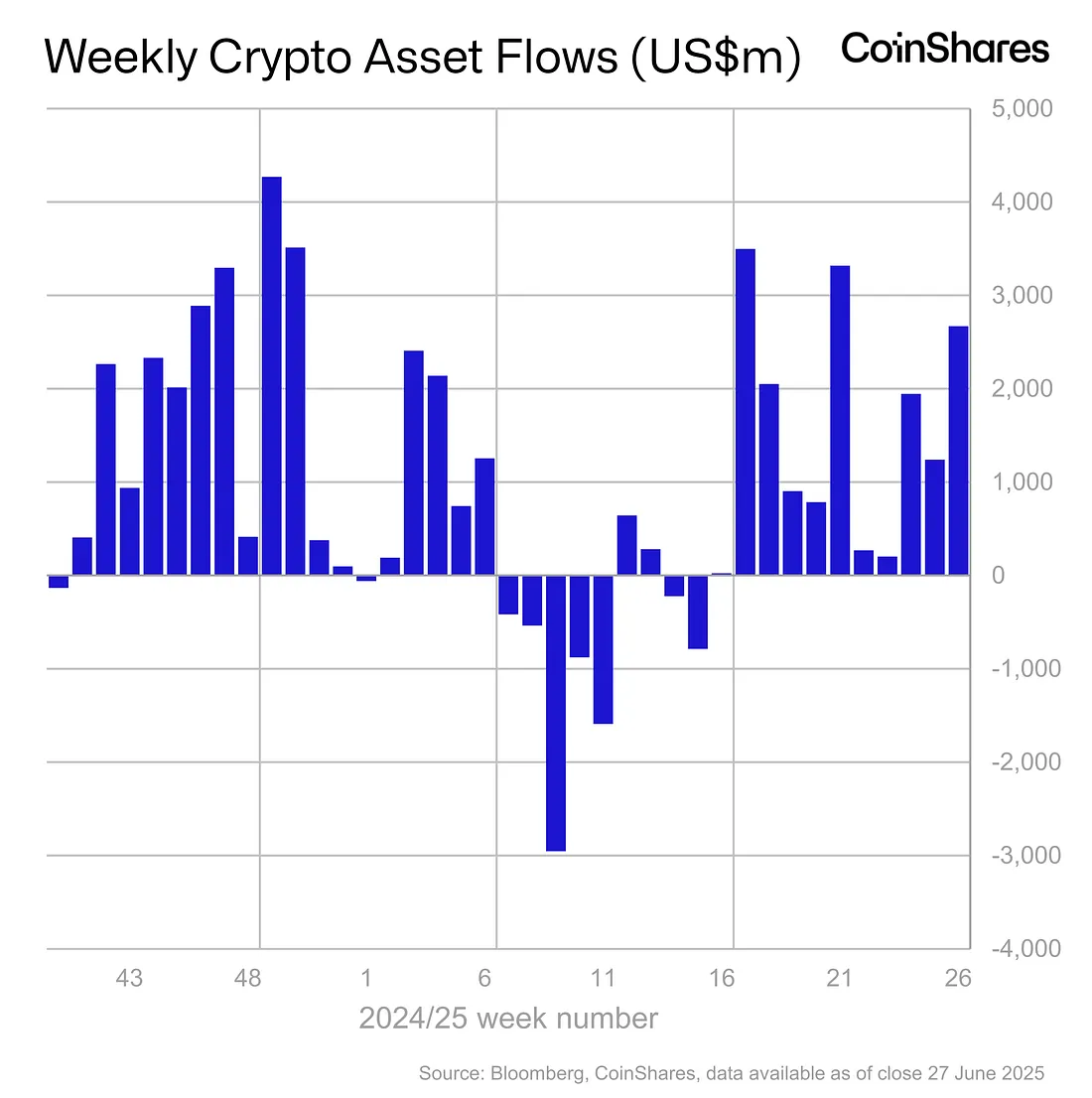
The cryptocurrency market is currently grappling with a sharp shift in investor sentiment, as institutional players have initiated a significant retreat from digital asset products. According to the latest data from CoinShares, institutional investors offloaded a total of $414 million in Bitcoin and broader crypto-assets over the past week. This move marks the first major selloff in five weeks, signaling a departure from the bullish momentum that had characterized the first quarter of the year.
The reversal in capital flows is largely attributed to a confluence of macroeconomic and geopolitical pressures. Investors, traditionally known for their long-term conviction, are increasingly wary of the escalating conflict in the Middle East and the persistent specter of sticky inflation in the United States, which continues to challenge the Federal Reserve’s interest rate trajectory.
The Chronology of the Downturn
For the past month, the crypto market had enjoyed a period of relative stability and consistent institutional inflows. However, the tide turned abruptly as global markets reacted to the heightened tension surrounding the Iran-Israel conflict. As geopolitical instability threatened global supply chains and energy prices, risk-off sentiment permeated traditional and digital markets alike.
- Mid-March: Institutional sentiment remained largely positive, with consistent net inflows into Bitcoin-backed ETFs and other investment vehicles.
- Late March: Reports of rising inflation figures in the United States began to dampen expectations for imminent interest rate cuts.
- Early April: As the conflict in the Middle East intensified, institutional portfolios saw a pivot toward defensive assets, triggering the first major liquidation event in over a month.
- Current Standing: The $414 million outflow has brought the total assets under management (AUM) across major institutional providers down to $129 billion, a notable contraction from recent highs.
Supporting Data: A Geography of Outflows
The distribution of these outflows reveals a stark contrast between North American markets and their European counterparts. The United States, which serves as the primary hub for institutional crypto activity, led the exodus with a staggering $445 million in outflows. This figure suggests that American institutional investors were the primary drivers behind the market’s cooling sentiment.
Conversely, Switzerland—a traditional bastion for crypto capital—saw minor outflows of $4 million. However, the data highlights a clear divergence in strategy among global participants. While the U.S. markets shed exposure, investors in Germany and Canada took a contrarian approach, opting to "buy the dip." Germany recorded inflows of $21.2 million, while Canada added $15.9 million to its digital asset holdings. This regional disparity underscores the fragmented nature of institutional risk appetite, as European investors appear more willing to view the current volatility as a strategic entry point rather than a signal for exit.
Asset-Specific Performance: Ethereum and Bitcoin Under Pressure
The composition of the selloff highlights that Ethereum (ETH) bore the brunt of the market’s frustration. Ethereum-based products saw a massive $222 million in outflows, a development that has pushed the asset’s year-to-date (YTD) flows into a net negative territory of $273 million. This performance reflects ongoing concerns regarding the regulatory hurdles facing Ethereum and the broader uncertainty surrounding the potential approval of a spot Ethereum ETF in the United States.
Bitcoin, the market’s bellwether, was not immune to the pressure. The asset recorded $194 million in outflows. Despite this weekly decline, Bitcoin remains resilient on a macro level, maintaining robust year-to-date inflows of $964 million. Notably, the institutional appetite for betting against the market has persisted; Short-Bitcoin products saw an additional $4 million in inflows, suggesting that a segment of institutional traders is positioning itself to profit from further downside volatility.
The broader altcoin market also experienced mixed results. Solana, which has been a darling of the institutional set in recent months, recorded $12.3 million in outflows. In contrast, XRP emerged as a notable exception, attracting $15.8 million in inflows. This outlier performance suggests that institutional investors are selectively rotating capital into assets with specific regulatory or utility narratives, even while exiting the broader market.
Implications for the Broader Crypto Ecosystem
The recent $414 million withdrawal serves as a critical stress test for the institutionalization of cryptocurrency. As the market moves deeper into the second quarter, several key implications emerge:
1. Macro-Sensitivity is Increasing
The direct correlation between the Iran conflict and crypto outflows demonstrates that digital assets are being treated increasingly like high-beta tech stocks. When geopolitical stability is threatened, institutional managers are prioritizing liquidity and capital preservation over crypto-exposure. This trend suggests that until global macro volatility subsides, the crypto market may struggle to decouple from traditional risk-asset performance.
2. The Inflation Trap
The "sticky" nature of U.S. inflation remains a primary concern for institutional investors. Higher-for-longer interest rates generally increase the opportunity cost of holding non-yielding assets like Bitcoin. If the Federal Reserve maintains a hawkish stance, institutional flows into crypto may remain muted until the market receives a clearer signal regarding the potential for monetary easing.
3. Regional Divergence and Regulatory Influence
The disparity between the U.S. outflows and the European inflows highlights the influence of regulatory environments on institutional behavior. While U.S. investors are grappling with heightened scrutiny and macroeconomic uncertainty, European markets—supported by more defined regulatory frameworks—are demonstrating a degree of resilience. This could lead to a long-term shift in where institutional capital is domiciled, should the U.S. regulatory landscape remain unpredictable.
4. The Resilience of Long-Term Conviction
Despite the $194 million weekly outflow for Bitcoin, the fact that year-to-date inflows remain at nearly $1 billion suggests that institutional conviction is not broken. Many investors are likely trimming positions to rebalance their portfolios in the face of volatility rather than exiting the asset class entirely. The presence of $4 million in new short-positions also indicates that the market is becoming more sophisticated, with participants utilizing institutional-grade hedging tools to navigate turbulent periods.
Strategic Outlook: What Comes Next?
As the industry looks toward the coming months, analysts are focused on several key indicators. First, the movement of capital in the U.S. spot Bitcoin ETFs will continue to act as the primary barometer for institutional sentiment. If these products see a return to net-positive flows, it would suggest that the market has successfully absorbed the current geopolitical shock.
Second, the performance of Ethereum remains a major question mark. With significant YTD outflows, the asset requires a catalyst—such as regulatory clarity or the launch of new staking-related investment products—to regain its standing as a preferred institutional asset.
Finally, the market will be closely watching the intersection of the Middle East conflict and global oil prices. If the conflict escalates further, energy costs could exacerbate inflation, further complicating the central bank’s ability to lower rates. This "perfect storm" of geopolitical and economic factors will likely keep the market in a state of high sensitivity, where institutional flows remain volatile and reactive to daily headlines.
In conclusion, while the $414 million outflow is a sobering reminder of the volatility inherent in digital assets, it also highlights the growing maturity of the market. Investors now have access to a variety of tools—from short-products to diversified altcoin vehicles—that allow them to navigate complex market environments. As the dust settles from this recent selloff, the focus will shift back to whether the fundamental drivers of crypto adoption, such as decentralization and hedge-asset narratives, can outweigh the current climate of macroeconomic uncertainty.
Disclaimer: Opinions expressed in this report are not investment advice. Investors should do their due diligence before making any high-risk investments in Bitcoin, cryptocurrency, or digital assets. Please be advised that your transfers and trades are at your own risk, and any losses you may incur are your responsibility. The author and publisher do not recommend the buying or selling of any assets, nor are they registered investment advisors. This report may contain affiliate links.