Marathon Digital Crosses 25,000 BTC Milestone in August 2026 as Full HODL Strategy Shapes Public Miner Dynamics
By the News Desk | Edited by Samuel Rae
Main Facts
Marathon Digital Holdings, one of the world’s largest publicly traded Bitcoin mining enterprises, has released its operational and financial update for August 2026. The company reported the successful minting of 670 Bitcoin (BTC) during the month, lifting its cumulative corporate treasury reserves to a staggering 25,000 BTC.
This latest production update highlights a critical evolutionary phase for institutional-scale cryptocurrency mining. In today’s highly competitive digital asset landscape, public miners are no longer judged solely by their raw hash rate or monthly output. Instead, investors and market analysts are evaluating operators through a holistic lens that encompasses energy efficiency, capital discipline, infrastructure uptime, and corporate treasury management.
By maintaining a strict "Full HODL" strategy—meaning the firm retains all or virtually all of the Bitcoin it mines rather than liquidating it to cover operational expenses—Marathon Digital is increasingly blurring the lines between an industrial infrastructure operator and a leveraged Bitcoin treasury vehicle.
Key Figures at a Glance:
- August 2026 Production: 670 BTC
- Total Treasury Balance: 25,000 BTC
- Operational Strategy: Full HODL (Zero forced monthly liquidations)
- Sector Focus: Hash rate deployment, power cost optimization, and balance sheet expansion
Chronology: The Path to 25,000 BTC
To understand the significance of Marathon’s August 2026 update, it is necessary to contextualize the historical trajectory of the company and the broader mining sector.
Early Expansion and Operational Scaling
During the foundational growth years of institutional Bitcoin mining, companies focused primarily on acquiring fleets of Application-Specific Integrated Circuit (ASIC) miners and securing low-cost power purchase agreements (PPAs). Marathon was among the aggressive early movers, expanding its footprint across multiple data centers in North America and scaling its operational hash rate into the exahash territory.
The Pivot Toward Treasury Accumulation
As market cycles matured—particularly following the 2024 halving event, which drastically reduced block rewards—mining economics tightened considerably. Miners faced squeezed profit margins due to rising global hash rates and fluctuating energy costs.
In response, many weaker operators were forced to adopt a liquid operational model, selling their newly minted Bitcoin daily or weekly to fund electricity bills, debt servicing, and hardware upgrades. Marathon, however, leveraged its robust balance sheet, equity offerings, and operational efficiency to chart a different course. By progressively stacking its mined rewards and optimizing debt instruments, the company systematically built its reserves. Crossing the 25,000 BTC threshold in August 2026 marks the culmination of years of disciplined accumulation, cementing Marathon’s position alongside major corporate holders like MicroStrategy.
Supporting Data & Operational Analysis
A thorough examination of Marathon’s August performance requires breaking down the interplay between raw production and balance sheet positioning.
Production Efficiency vs. Raw Output
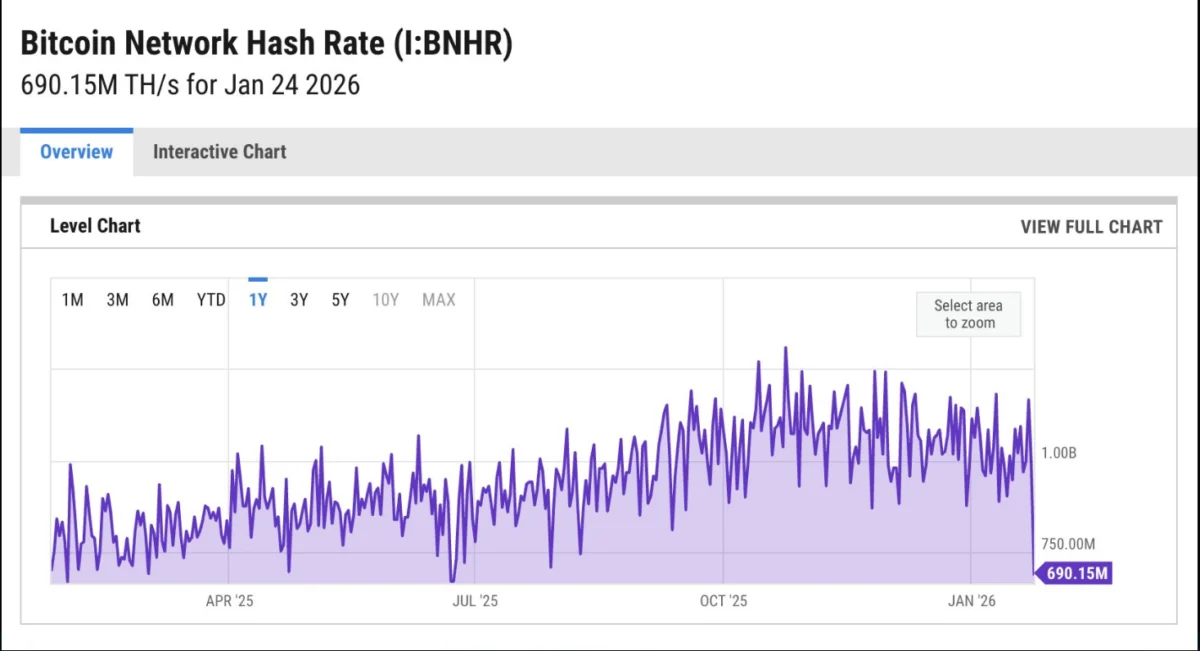
Marathon’s generation of 670 BTC in August serves as a vital health check on the company’s real-world operational execution. While headline metrics like deployed hash rate (measured in exahashes per second, or EH/s) indicate theoretical capacity, monthly production reflects the true friction of the mining business.
Factors influencing this 670 BTC figure include:
- Network Difficulty Adjustments: As more miners come online globally, the computational difficulty required to solve a block increases.
- Uptime and Curtailment: Power grid demands often require miners to temporarily shut down operations (curtailment) during peak heatwaves or winter freezes. Marathon’s ability to navigate these curtailment agreements directly impacts its monthly yield.
- Machine Fleet Efficiency: The transition from older-generation rigs (such as the S19 series) to next-generation, energy-efficient hardware dictates how many joules per terahash the company expends.
The Mechanics of the Full HODL Strategy
By refusing to sell its monthly production into the open market, Marathon insulates itself from immediate downward selling pressure that typically plagues miners who rely on liquidating assets. However, this strategy introduces unique financial dynamics:
- Direct Beta to Bitcoin: Holding 25,000 BTC means Marathon’s corporate valuation is deeply tethered to the spot price of Bitcoin. When BTC rallies, the net asset value (NAV) of the company surges, often amplifying gains for shareholders. Conversely, during market corrections, the balance sheet can experience substantial unrealized drawdowns.
- Capital Raising Requirements: Because operating an industrial mining fleet requires substantial cash for electricity, maintenance, and expansion, a Full HODL strategy necessitates alternative capital-raising mechanisms. Marathon has historically utilized convertible notes, equity issuance, and credit facilities to fund operations without touching its core treasury.
Official Responses and Market Context
While the direct data comes via Marathon Digital’s investor relations platform (IR MARA), financial analysts and market makers have been quick to dissect the implications of the August update.
Industry observers note that public mining equities have undergone a structural re-pricing. Wall Street no longer treats miners as simple tech-hardware proxies. Instead, institutional investors categorize them into two distinct buckets:
- Pure Play Operators: Firms focused purely on extracting maximum efficiency, selling coins immediately to lock in cash flows, and operating on razor-thin margins.
- Treasury Hybrids: Firms like Marathon that leverage their mining operations as a proprietary "Bitcoin printing press," feeding a growing corporate treasury designed to act as a high-beta proxy for the asset itself.
Market analysts emphasize that Marathon’s 25,000 BTC stockpile places it in an elite tier of corporate treasuries. This creates a dual-engine value proposition: investors gain exposure to the organic cash-flow generation of an industrial infrastructure giant plus a massive, compounding reserve of digital gold.
Implications for Investors and the Broader Mining Sector
The implications of Marathon’s August 2026 update extend far beyond a single company’s monthly ledger. They signal broader trends shaping the future of cryptocurrency markets.
1. The Institutionalization of Miner Balance Sheets
Marathon’s milestone proves that public miners can successfully transition into hybrid treasury-operating entities. As traditional financial institutions seek regulated avenues to gain Bitcoin exposure, companies holding vast reserves of BTC on their balance sheets offer a compelling alternative to spot ETFs—especially given the potential for miners to generate organic yield through block rewards.
2. Heightened Sensitivity to Volatility
With 25,000 BTC sitting on its books, Marathon’s equity volatility is virtually guaranteed to outpace traditional equities. Investors must weigh the upside potential of a booming Bitcoin bull market against the balance-sheet risks inherent in steep crypto bear markets. Risk management and capital structure discipline will remain paramount for executive leadership.
3. The Ongoing Battle for Energy and Efficiency
As Marathon continues to hoard its production, the pressure on its operational arm intensifies. Without the cushion of selling mined BTC to pay monthly expenses, the company must rely entirely on external financing and operational efficiencies to fund its power contracts and infrastructure footprint. Consequently, access to ultra-low-cost energy (whether nuclear, hydro, natural gas, or curtailed renewable power) will dictate which miners survive and thrive in the years ahead.
Conclusion
Marathon Digital’s August 2026 update—highlighted by 670 BTC mined and a formidable 25,000 BTC treasury—reinforces the company’s dual identity as both an industrial infrastructure titan and a premier Bitcoin treasury vehicle. As network difficulty evolves and market volatility persists, the market will closely watch how Marathon balances its relentless accumulation strategy with the day-to-day realities of power costs, fleet management, and capital discipline. For now, the company remains anchored firmly at the center of the public-market cryptocurrency conversation.
For further details and primary documentation, visit the official Marathon Digital Investor Relations Platform.