Grid Resilience in Focus: How a Major Winter Storm Shook the Bitcoin Network
The intersection of energy infrastructure and decentralized finance was placed under a high-pressure spotlight this past weekend as a severe winter storm system swept across the United States. As temperatures plummeted and regional power grids faced the dual challenges of extreme demand and localized supply disruptions, a significant portion of the global Bitcoin mining fleet was forced to power down. This coordinated, though often involuntary, retreat provided a real-world case study in how the Bitcoin network—and the industrial mining operations that secure it—interact with the traditional energy grid.
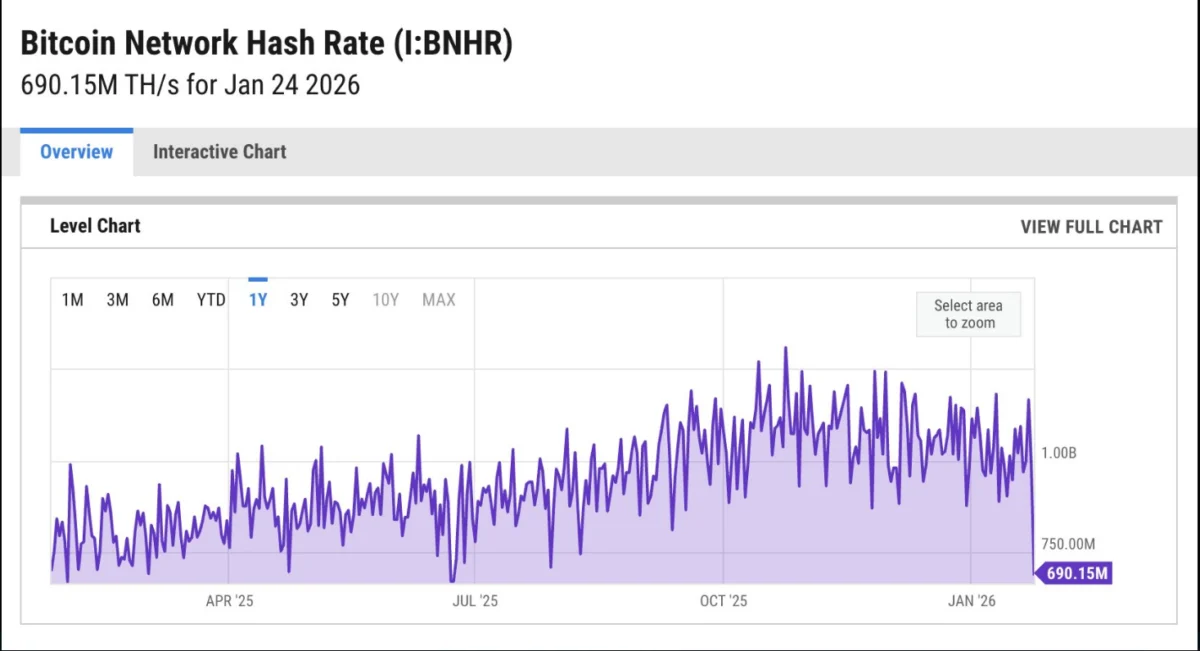
For a brief, volatile window, the total hashrate securing the blockchain experienced a dramatic contraction, underscoring the concentration of mining infrastructure in North America and the sensitivity of these operations to environmental volatility. While the network remained secure and operational, the event served as a stark reminder of the physical realities underpinning the digital asset ecosystem.
A Chronology of the Freeze: From Peak Performance to Rapid Scaling
The disruption began in earnest on Friday, as the storm front moved across the American Midwest and South, placing immense stress on regional utility providers. By Saturday, the impact on Bitcoin mining operations was immediate and measurable.
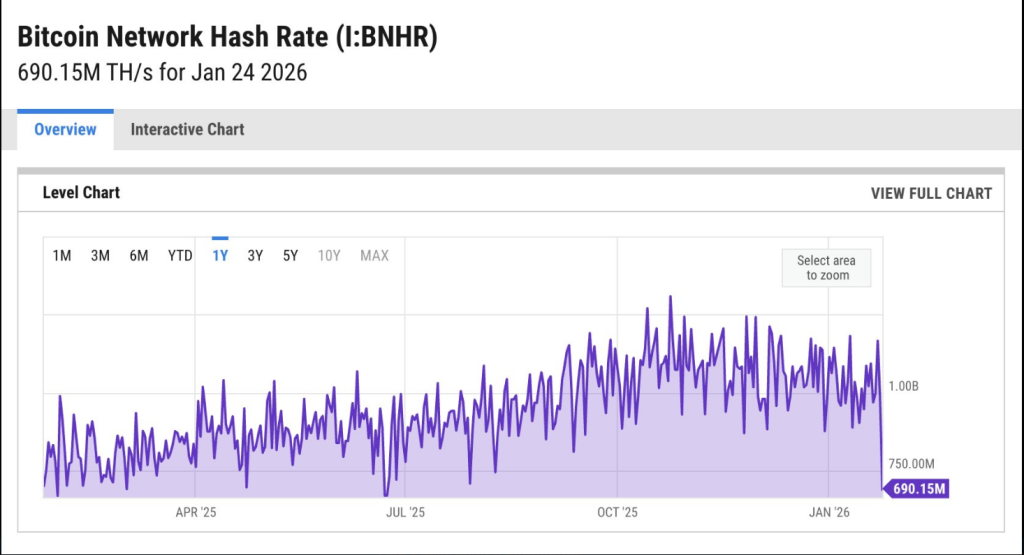
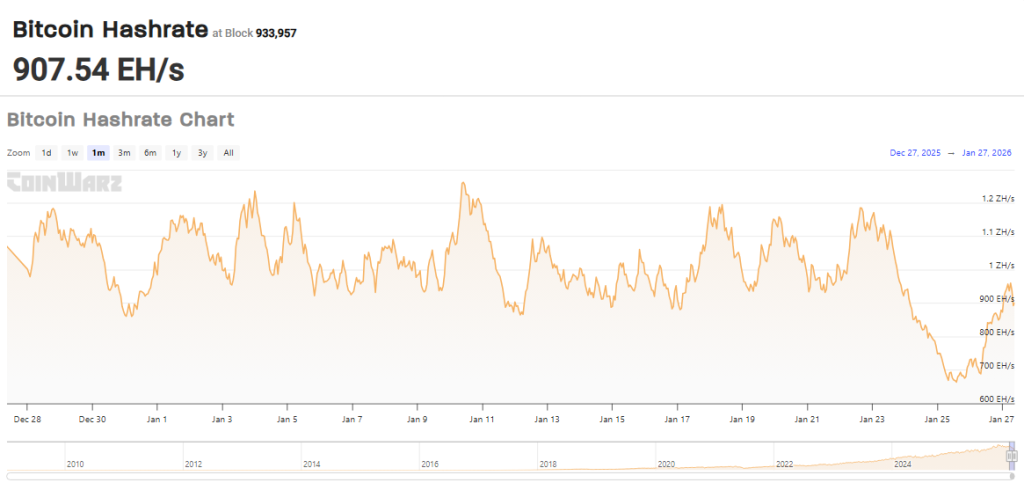
According to mining industry trackers, the network hashrate began a sharp decline on Friday as facilities in Texas—the epicenter of American Bitcoin mining—and the Southeast initiated emergency load-shedding protocols. As the weekend progressed, the downward trend accelerated. By Sunday, the network’s total processing power hit a seven-month low, bottoming out at approximately 663 EH/s (exahashes per second).
This represented a staggering contraction in network security, effectively removing nearly 40% of the world’s mining capacity from the pool in a single 24-hour window. The recovery phase began shortly thereafter. As utility crews restored power to residential areas and the weather systems moved eastward, mining rigs began the process of re-energizing. By Monday, the network had begun a rapid ascent, climbing back toward 854 EH/s, signaling the resilience of the industry and the speed at which industrial mining infrastructure can return to full capacity once grid conditions stabilize.

Supporting Data: The Magnitude of the Mining Retreat
The sheer scale of the disruption highlights the current state of Bitcoin’s geographic distribution. According to the Hashrate Index, the United States accounts for nearly 38% of global Bitcoin mining power. When a significant portion of that geography is impacted by a singular weather event, the effects on the global network are unavoidable.
The Federal Energy Information Administration (EIA) has identified over 130 dedicated cryptocurrency mining sites across the United States. Many of these are strategically located in states like Texas, where the Electric Reliability Council of Texas (ERCOT) operates an independent grid that is particularly sensitive to extreme temperature swings.
The financial impact on mining firms was immediate. Data compiled by analytics firms, including CryptoQuant and insights shared by industry analysts, provided a granular look at the output drop. For instance, some of the industry’s largest players saw their daily production figures slashed as they prioritized grid stability:
- Marathon Digital: Saw production drop from roughly 45 Bitcoin per day to just seven.
- RIOT Platforms: Experienced a contraction from 16 daily coins to three.
- CleanSpark (CLSK): Reported a dip from 22 to 12 Bitcoin per day.
- IREN: Witnessed a decline from 18 to six coins.
These figures illustrate the "load-balancing" function that miners play. Because their operations are highly modular, they can be shuttered or restarted in minutes, effectively acting as a "flexible load" that utilities can turn to when the residential or commercial demand for electricity reaches critical thresholds.
Official Responses and Strategic Load Shedding
Mining operators have defended these shutdowns, characterizing them as intentional and responsible. Abundant Mines, a crypto mining firm based in Oregon, was one of the first to confirm that the mass outage was not just a result of power lines failing, but a strategic decision to reduce the strain on regional utilities.
"The pause was entirely intentional," noted a representative from an industry consortium. "When regional grids are fighting to keep heat on in homes and hospitals, it is both a regulatory requirement and an economic necessity for large-scale miners to throttle back. We aren’t just consumers of electricity; we are partners in the grid’s survival."
In Texas, the collaboration between miners and grid managers has become a blueprint for industrial energy management. By curtailing operations during periods of peak demand, miners avoid the most expensive electricity rates while preventing grid failure. This practice, often referred to as Demand Response, allows the grid to maintain frequency and avoid blackouts that would otherwise impact millions of households. However, as the storm demonstrated, the trade-off is a temporary, yet significant, reduction in the security and profitability of the Bitcoin blockchain.
Implications for the Network and Market
The event has triggered a broader discussion regarding the long-term implications of "weather-correlated" mining. While the network’s hashrate recovered quickly, investors and developers are left to consider the risks posed by such high levels of geographic concentration.
1. Network Security and Decentralization
While the drop in hashrate was significant, it did not threaten the viability of the Bitcoin network. The protocol’s difficulty adjustment mechanism is designed to handle such fluctuations. However, the event serves as a warning that if a storm were more widespread or persistent, the potential for a sustained drop in hashrate could lead to slower block times and increased transaction costs for users. This has renewed calls for further decentralization of mining capacity to more diverse geographic locations, reducing the vulnerability to regional climate events.
2. Market Sentiment and Price Volatility
Bitcoin’s price action throughout the event was complex. Trading around the $88,300 mark, the asset faced downward pressure from a variety of macroeconomic factors, including geopolitical tensions and interest rate speculation. Interestingly, the mining outage did not trigger a panic sell-off. Instead, it highlighted the market’s growing maturity; traders largely viewed the hashrate dip as a transitory "grid management" issue rather than a fundamental flaw in the Bitcoin protocol itself.
3. Regulatory and Energy Policy
The role of Bitcoin miners as "grid stabilizers" is likely to become a central theme in energy policy. Regulators are now tasked with balancing the growth of the digital asset industry with the need for stable, affordable energy. As more mining operations integrate directly with renewable energy projects and demand-response programs, the narrative is shifting from "miners as energy drains" to "miners as grid assets."
4. Revenue Sustainability
For the mining companies, the event provided a harsh lesson in revenue volatility. When a significant portion of a firm’s fleet goes offline, the daily production figures plummet, yet the overhead costs—such as hardware depreciation and facility rent—remain constant. This puts pressure on companies to maintain robust cash reserves to weather the inevitable "winter" of the power grid, as well as the crypto market cycles.
Conclusion: A Resilient, Yet Physical System
The weekend’s winter storm has acted as a stress test for the American Bitcoin mining industry. It proved that the infrastructure is capable of rapid, coordinated responses to environmental emergencies, thereby playing a constructive role in maintaining the stability of the regional power grid. However, it also underscored the vulnerabilities inherent in centralized, high-density mining clusters.
As the industry continues to mature, the focus will likely shift toward greater geographic diversification and more sophisticated energy-hedging strategies. For now, the network remains intact, the hashrate is recovering, and the miners have once again demonstrated that they are not merely passive consumers of energy, but active participants in the modern, fragile, and increasingly interdependent energy landscape. The event was not a failure of the network, but a testament to its flexibility—a quality that will be increasingly important as the world moves toward a more digitized, energy-intensive future.