Dan Loeb’s Third Point Stakes Claim in Core Scientific, Signaling a Structural Shift from Bitcoin Mining to AI Infrastructure
By the News Desk | Edited by Samuel Rae
Based on Third Point’s Q2 13F filing, SEC disclosures, and evolving market data.
Executive Summary & Main Facts
Billionaire investor Dan Loeb’s prominent hedge fund, Third Point, has officially entered the equity trade bridging cryptocurrency mining and artificial intelligence. According to its recent Q2 13F filing with the U.S. Securities and Exchange Commission (SEC), Third Point has disclosed an initial equity position of 54,000 shares in Core Scientific (NASDAQ: CORZ), a heavyweight in the digital asset infrastructure space.
This move is not a direct play on cryptocurrency tokens or spot Bitcoin accumulation. Instead, it represents a sophisticated institutional bet on physical infrastructure. Core Scientific, which built its enterprise value around industrial-scale Bitcoin production, has increasingly positioned itself as a critical landlord for high-performance computing (HPC) and artificial intelligence (AI) workloads.
As the generative AI boom collides with a global shortage of power generation, real estate, and cooling capacity, Wall Street is beginning to re-evaluate the physical assets sitting on the balance sheets of legacy crypto miners. By purchasing equity in Core Scientific, Third Point is betting that the underlying real estate—specifically high-voltage power substations, massive land parcels, and industrial data centers—can be repurposed to capture astronomical rents from AI compute providers.
Chronology of the Pivot: From Crypto Winter to AI Gold Rush
To understand the weight of Third Point’s recent disclosure, it is necessary to examine the rapid evolutionary timeline of the Bitcoin mining sector over the last half-decade:
- 2020–2021 (The Mining Boom): Driven by surging cryptocurrency prices, capital flooded into Bitcoin mining. Companies like Core Scientific aggressively scaled up, acquiring thousands of specialized Application-Specific Integrated Circuit (ASIC) rigs, securing cheap long-term power contracts, and expanding physical data centers across North America.
- 2022–2023 (The Crypto Winter & Restructuring): The rapid collapse of digital asset prices, combined with skyrocketing energy costs, pushed several major mining firms to the brink of insolvency. Core Scientific itself filed for Chapter 11 bankruptcy protection in late 2022, burdened by debt and hardware financing obligations. However, this crisis forced the company to restructure its balance sheet and re-examine its underlying assets.
- Early 2024 (The Halving & The AI Catalyst): Following the April 2024 Bitcoin halving—which slashed block rewards by 50% and compressed profit margins—miners desperately sought alternative revenue streams. Concurrently, the explosion of generative AI models created an unprecedented bottleneck in global data-center infrastructure. Major cloud providers and AI hyperscalers began looking outside traditional tech hubs for power.
- Mid-2024 (The CoreWeave Deal and Institutional Validation): Core Scientific made headlines by securing a massive, multi-gigawatt hosting contract with AI cloud provider CoreWeave, validating the thesis that mining sites could be transformed into AI powerhouses.
- Q2 2024 Filing (Third Point’s Entry): Third Point’s Q2 13F filing captures this institutional realization. By disclosing its 54,000-share stake, the hedge fund formally signaled that sophisticated macro investors are pricing crypto miners not just on their BTC output, but on their optionality in the AI compute market.
Supporting Data: The Convergence of Power and Compute
The financial and operational metrics driving this trade reveal why institutional capital is taking notice.
1. The Energy Bottleneck
Artificial intelligence models require unprecedented amounts of electricity. Training frontier models like GPT-4 or its successors demands continuous clusters of power measured in hundreds of megawatts—scale that standard commercial real estate cannot easily accommodate. Bitcoin miners, conversely, spent years embedding themselves near hydroelectric dams, geothermal sources, nuclear plants, and underutilized electrical grids where power was abundant and cheap.
2. Infrastructure Valuation Shifts
Historically, mining equities were valued using simple, highly volatile formulas:
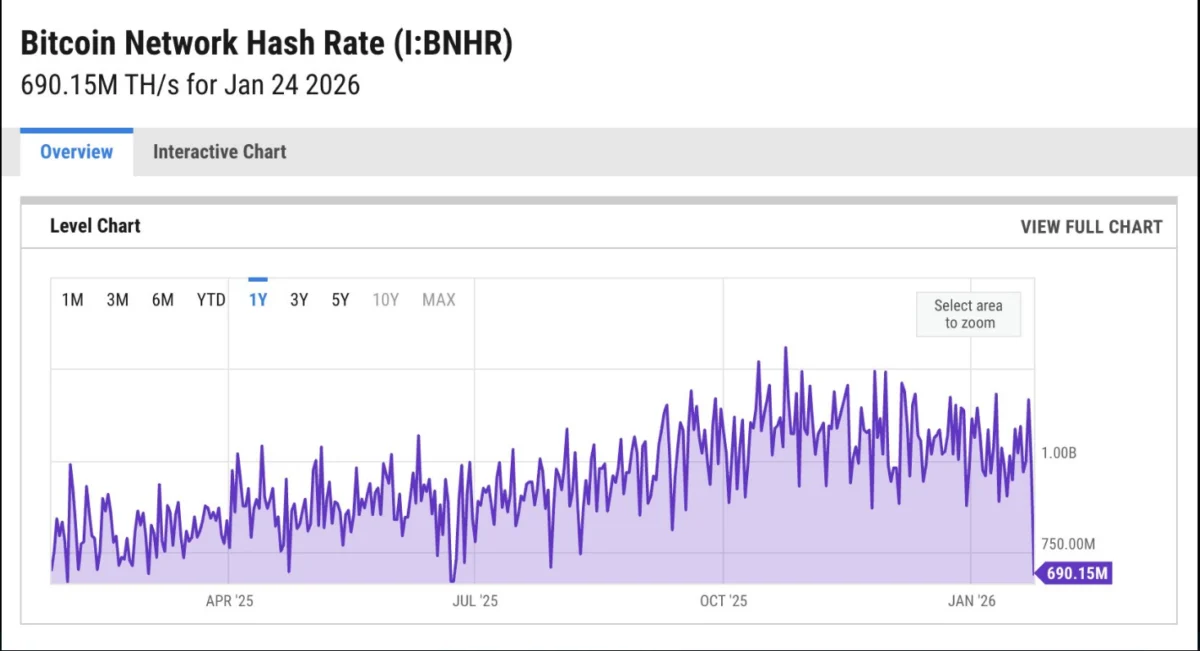
$$textMarket Cap = (textOperational Hashrate times textBTC Price) – textPower Costs$$
Today, analysts covering companies like Core Scientific are utilizing a sum-of-the-parts (SOTP) valuation framework that separates the business into distinct segments:
- Traditional Bitcoin Mining: Valued on hash rate efficiency and mining margins.
- HPC/AI Hosting Contracts: Valued on long-term, inflation-adjusted, fixed-fee lease agreements (similar to traditional data center REITs like Equinix or Digital Realty).
3. Third Point’s Stake in Context
While Third Point’s initial position of 54,000 shares is relatively modest in terms of total portfolio allocation for a multi-billion-dollar hedge fund, 13F filings are rarely viewed in isolation. They serve as "smoke alarms" for institutional trends. When a macro-driven activist and event-driven fund like Third Point takes an equity stake in a restructured crypto-infrastructure play, it often precedes a broader institutional rotation into the asset class.
Official Responses and Regulatory Context
Public filings via the SEC’s EDGAR database highlight the transparency with which these positions are established. Under U.S. reporting requirements, institutional investment managers with at least $100 million in qualifying assets under management must file Form 13F within 45 days after the end of each calendar quarter.
Executives from Core Scientific and competing miners (such as Hut 8, TeraWulf, and Cipher Mining) have been increasingly vocal during earnings calls regarding their willingness to pivot capacity away from proof-of-work mining and toward high-performance computing if the economic returns justify the capital expenditure.
Core Scientific leadership has repeatedly emphasized that their primary asset is not simply the software or the ASIC machines, but their interconnection rights—the legal and physical permission to draw massive amounts of steady megawatt power directly from regional grids. In an era where utility companies are quoting multi-year delays for new data-center grid connections, an operational substation with immediate power access is treated like liquid gold.
Market Implications: Risks and Rewards
The thesis that Bitcoin miners can seamlessly transition into AI data centers carries profound implications, yet it is fraught with complex operational hurdles.
The Bull Case: Diversification and Multiple Expansion
If companies like Core Scientific successfully execute long-term hosting agreements with AI giants, their revenue models will undergo a radical transformation. Instead of enduring the hyper-cyclical, high-beta volatility of the cryptocurrency markets, these firms could secure stable, predictable cash flows backed by corporate-grade credit tenants. This transition could trigger a multiple expansion, causing traditional equity markets to price mining stocks at valuations closer to high-growth tech infrastructure companies than speculative crypto plays.
The Bear Case: Execution Risk and Technical Divergence
Skeptics warn that investors should not underestimate the operational friction involved in pivoting a mining facility into an AI data center:
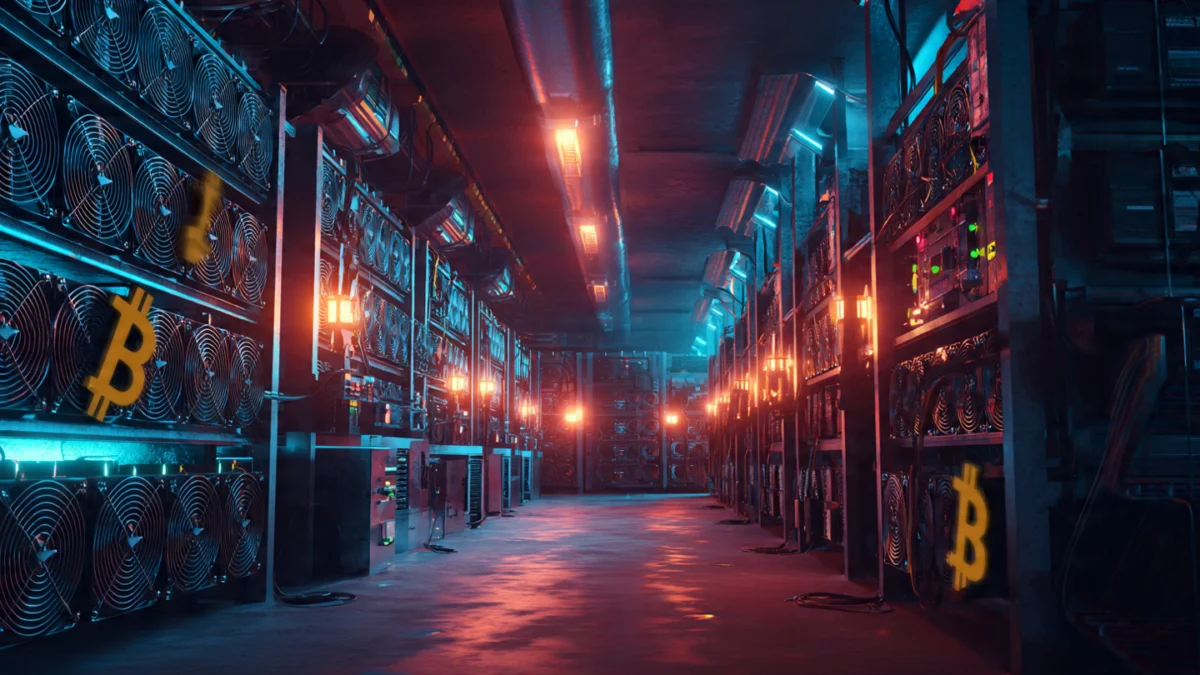
- Hardware Realities: Bitcoin mining rigs are loud, dense blocks of specialized silicon that require relatively straightforward immersion or air cooling. Conversely, AI clusters rely on dense NVIDIA GPUs (like H100s and Blackwell chips) that require sophisticated liquid-cooling infrastructure, pristine fiber-optic connectivity, and uptime reliability standards (Tier III/IV) that far exceed the tolerances of basic crypto operations.
- Capital Expenditure: Rebuilding a mining shed into an enterprise-grade AI facility requires hundreds of millions of dollars in fresh capital, leading to potential dilution or debt leverage.
- Opportunity Cost: If Bitcoin experiences a massive bull run, miners who aggressively gutted their mining capacity to install AI servers may find themselves missing out on record-high block rewards and transaction fees.
The Crypto Market Takeaway
For the broader cryptocurrency ecosystem, Third Point’s investment highlights an evolving paradigm. Institutional investors are finding innovative ways to gain exposure to the digital asset value chain without holding spot tokens or navigating complex digital asset custody solutions. By utilizing public equities regulated by traditional frameworks, mega-funds can participate in the digital asset infrastructure boom safely within established portfolio guidelines.
Conclusion
Dan Loeb’s Third Point taking a position in Core Scientific is more than a routine portfolio adjustment; it is a symptom of a larger industrial metamorphosis. As the digital age demands more power for artificial intelligence than legacy grids can easily supply, the physical footprints built to mine Bitcoin have become some of the most valuable real estate in the technology sector.
Whether this specific trade heralds a golden age of infrastructure convergence or serves as a cautionary tale of overextension remains to be seen. However, one reality is now undeniable: the boundary lines separating Bitcoin mining, energy generation, and artificial intelligence have officially blurred, and Wall Street is taking notice.